Local Wildlife & Green Spaces
Manor Gardens backs onto some of Durban's richest remaining forest. That means we share our streets and gardens with genuinely wild neighbours. A little context goes a long way, especially if you've just moved here.
Latest Spotted
Neighbours' own sightings from around Manor Gardens, confirmed by email before they go live, so this stays a genuine local record.
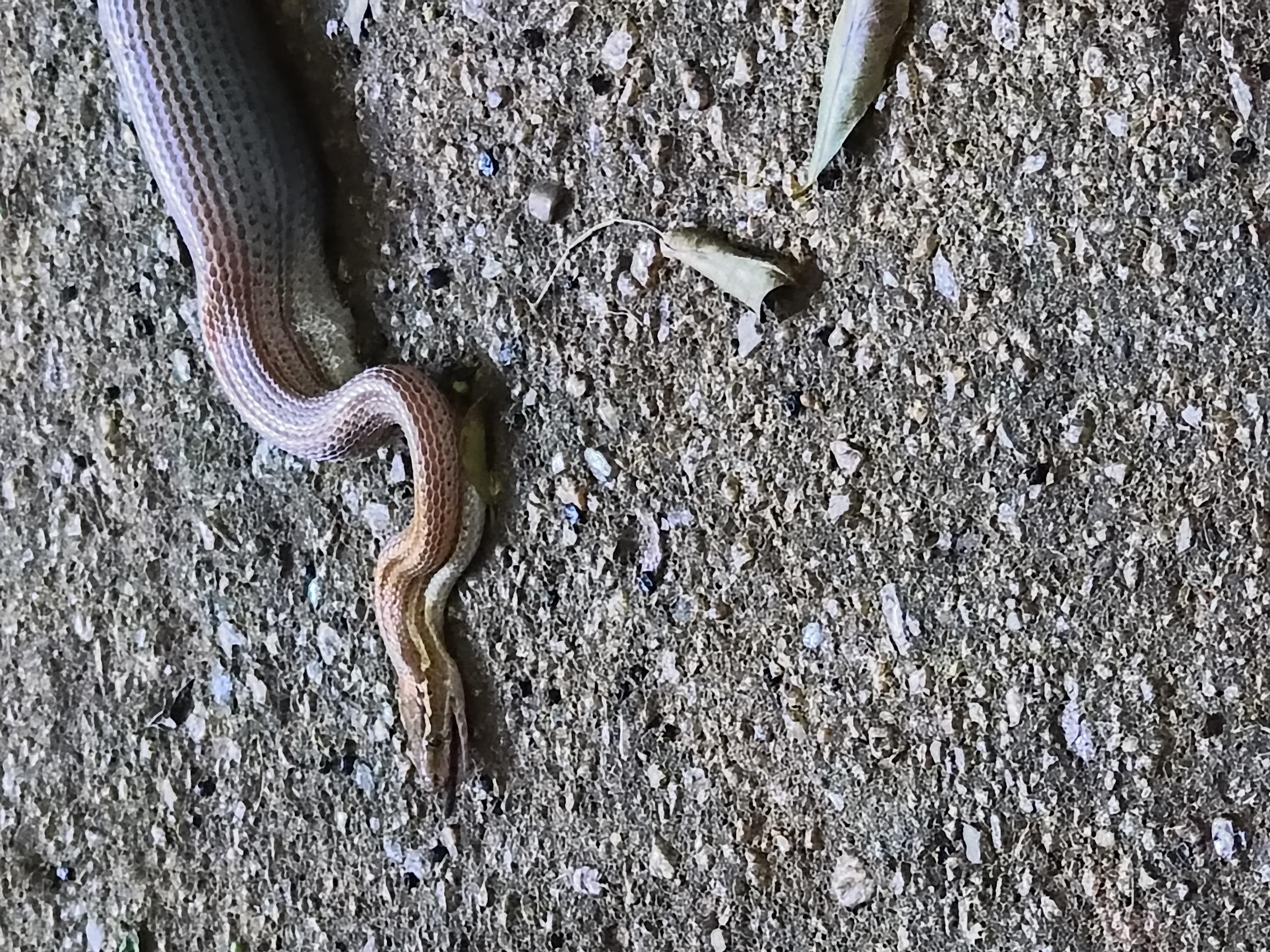
Brown House Snake
Sat, 02 May
Apparently full of rodent.
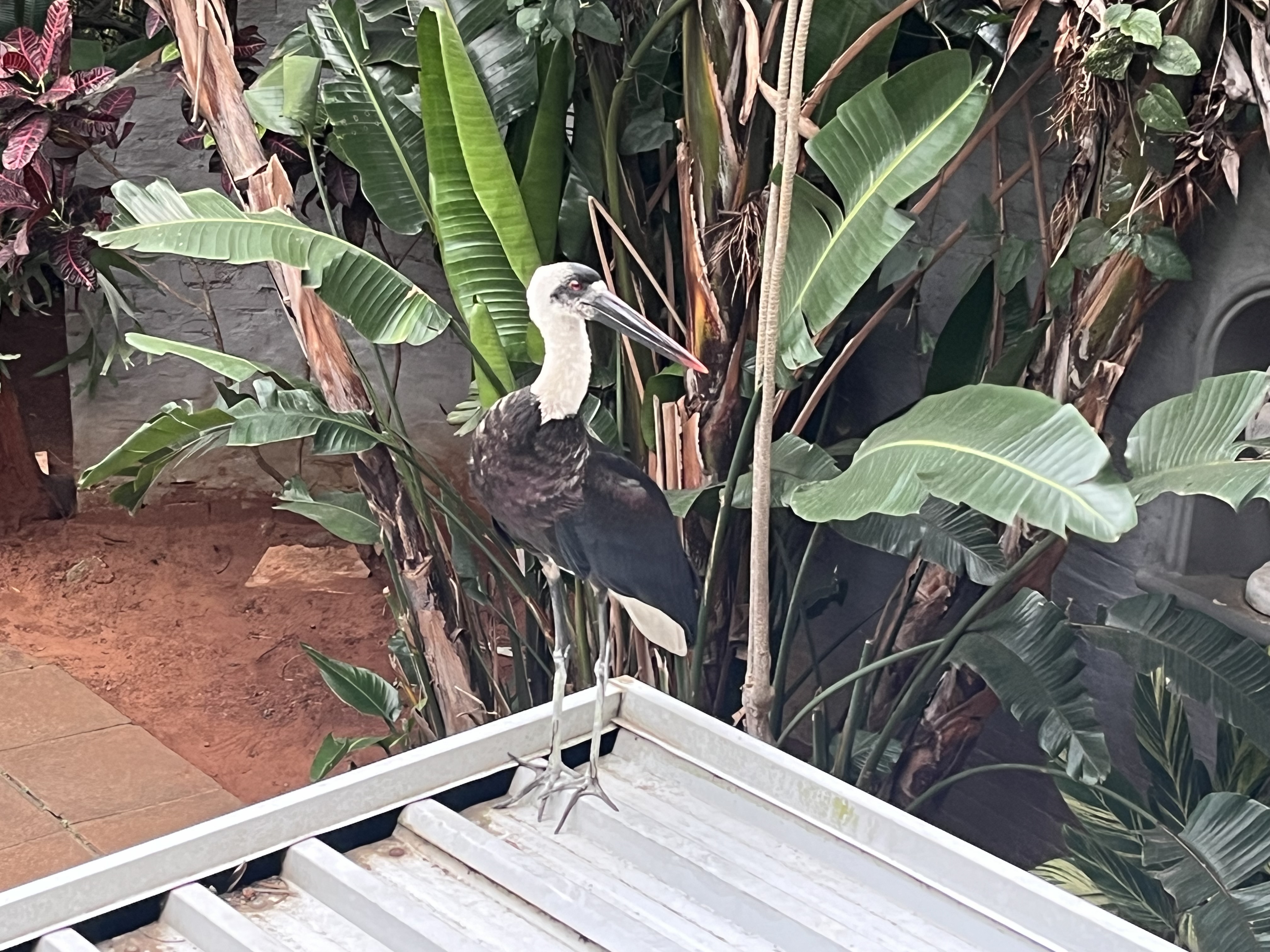
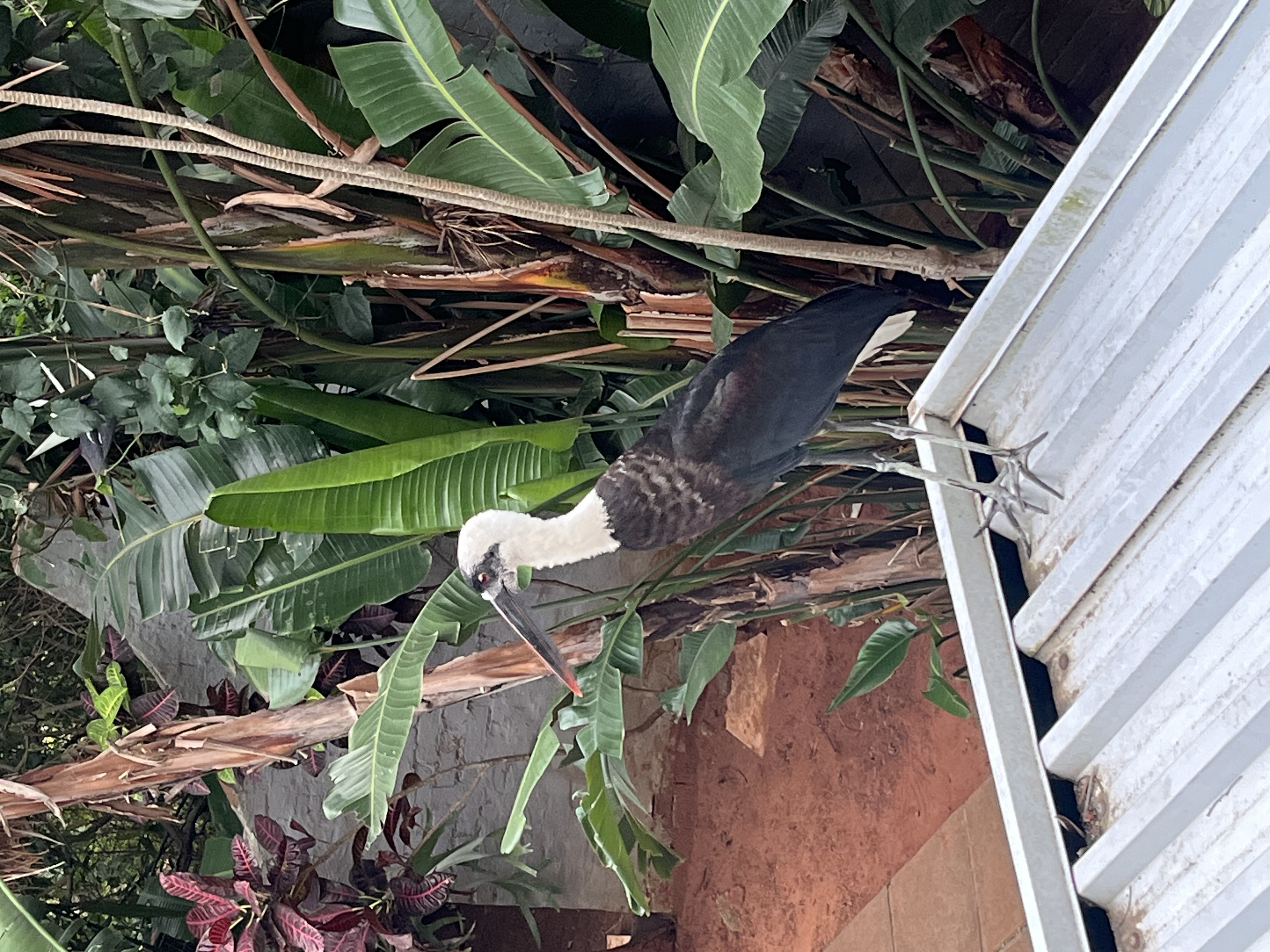
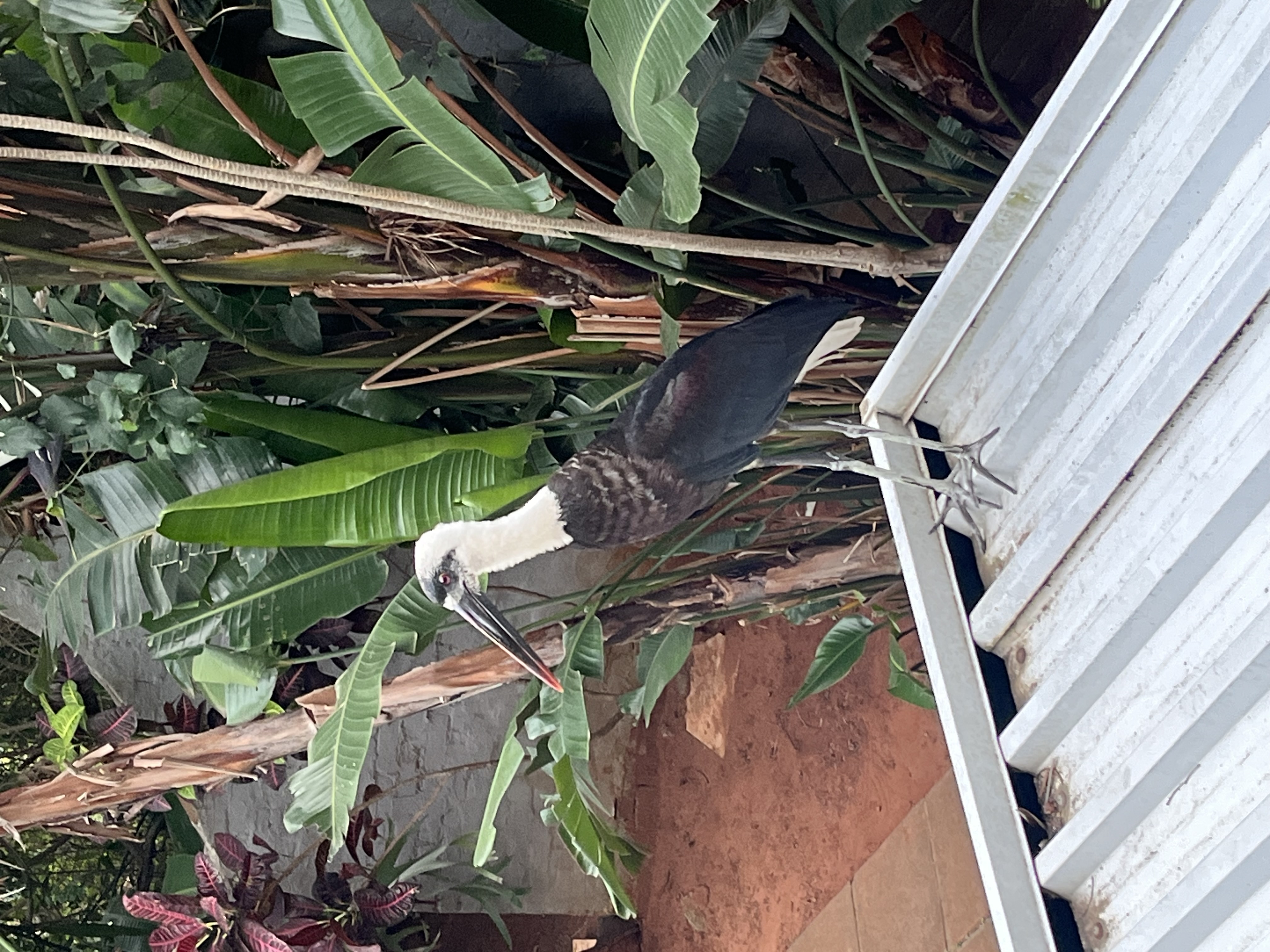
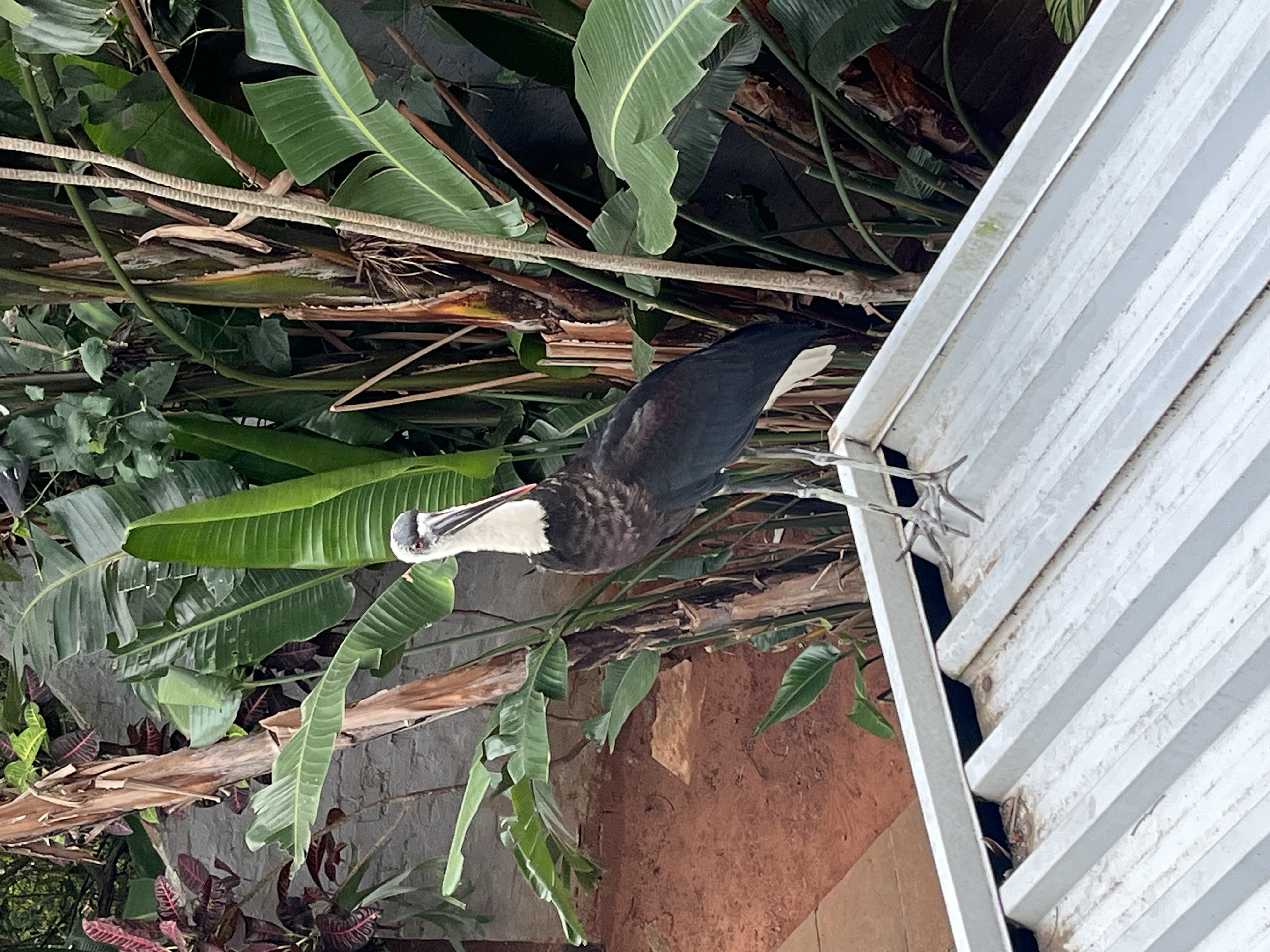
Woolly-necked Stork
Sat, 30 Sept · 15:02
While eating my late lunch I spotted this beautiful bird visible from my balcony.
Pigeon Valley Nature Reserve
Right on our doorstep on the Berea, Pigeon Valley is an 11-hectare municipal nature reserve protecting one of the last remnants of Durban's original coastal forest: the "Stella bush" that once covered much of this ridge. It's a genuine rarity: a high-biodiversity, old-growth forest sitting inside a city, with over 100 tree species (almost all indigenous) and around 160 recorded bird species, including the endangered spotted ground-thrush in winter.
It's also home to red and blue duiker, Cape genets, a troop of banded mongoose, slender and water mongoose, and the vervet monkeys covered below. In other words, most of what's wandering into Manor Gardens gardens started right here.
- Where: Princess Alice Avenue, Bulwer/Berea
- Hours: 07:30–16:00 daily, free entry
- Good for: a short forest walk (the Natal Elm Trail, ~400m), birdwatching, a genuine escape without leaving the suburb
Run by eThekwini Municipality with support from the volunteer Friends of Pigeon Valley, who lead a public walk on the second Saturday of every month.
Vervet Monkeys
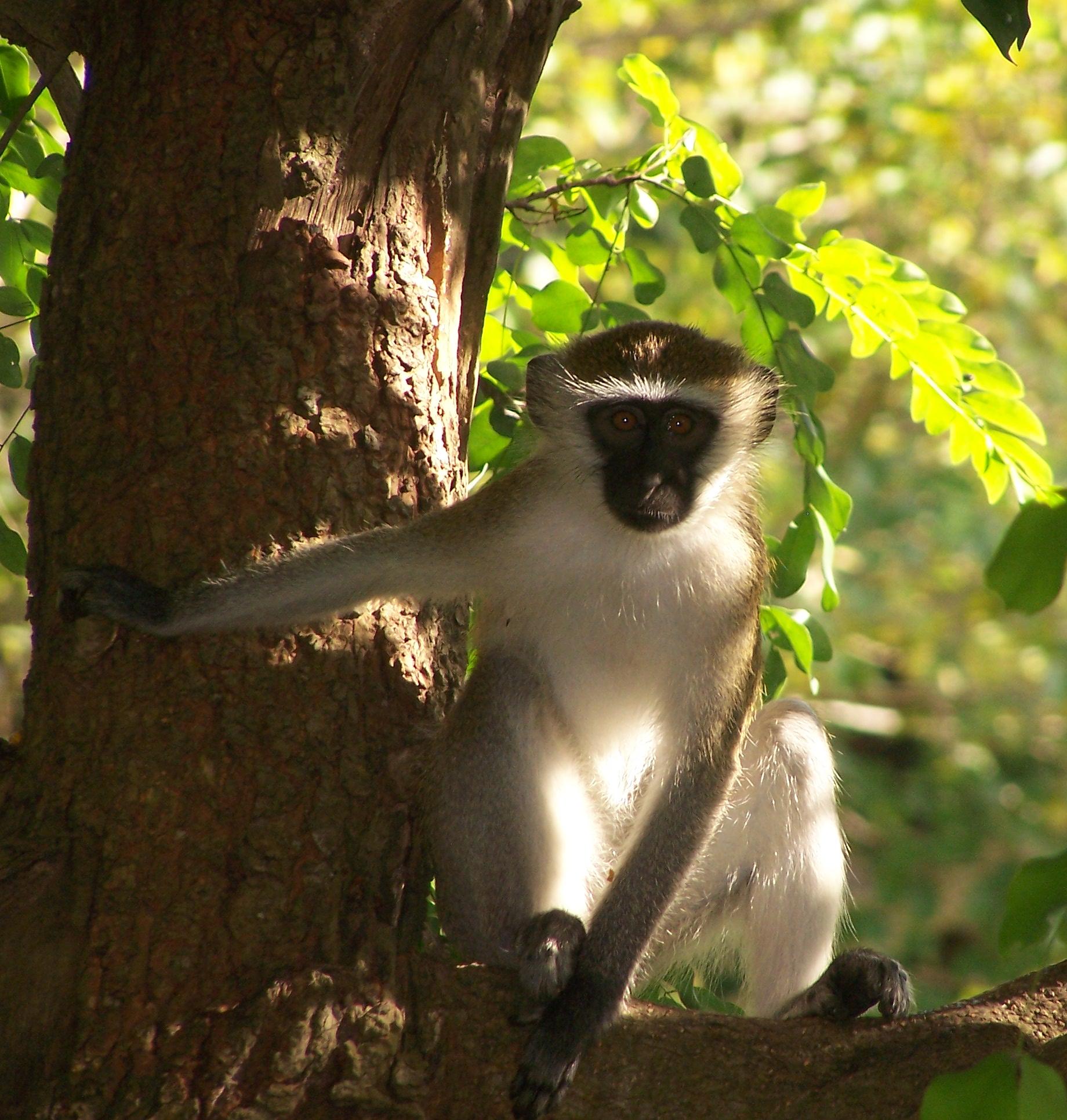
If you're new to Manor Gardens, meeting your first troop of vervet monkeys raiding the fruit bowl can be a shock. Worth knowing: they were here first. Every troop in this area is descended, mother to daughter, from monkeys that lived on this exact ridge long before any of the houses did. Female vervets never leave their birth territory. So when Manor Gardens was built, the monkeys simply had nowhere else to go. They're not invading us. We built on top of them.
They're not pests, and harming them can lead to cruelty charges. They're wild animals doing exactly what any animal does: looking for food, shelter and safety for their young in a world that keeps shrinking around them.
🚫 Please don't feed them
This is the single biggest thing you can do to keep the peace:
- Feeding trains monkeys to associate people with food. That's what leads to grabbing food from hands, raiding kitchens and repeat visits
- Suburban gardens already offer plenty of natural food (fruit, flowers, insects). They don't need ours
- A fed troop keeps coming back, and teaches the next generation to do the same
🏠 Keeping them out of your house
- Keep windows and doors closed when you're not in the room, especially near the kitchen
- Keep fruit, bread and pet food out of sight and off counters
- Fit screens or mesh to security gates and burglar bars
- Secure bin lids tightly
- Remove bird feeders if monkeys are raiding them
- If one gets in: stay calm, open a clear path outside, and give it space. Don't corner it
📞 Injured, orphaned or trapped? Call Monkey Helpline
Run from Westville, Monkey Helpline rescues, treats and rehabilitates monkeys across the greater Durban area, and gives lifetime sanctuary care to those that cannot go back to the wild. There is no charge for what they do. It runs on donations. They also give advice on monkey-proofing.
Carol: 082 411 5444Call rather than email in an emergency. That is their own instruction. More at monkeyhelpline.co.za.
The work of Steve Smit and Carol Booth, who founded Monkey Helpline in Westville, filmed by The Dodo. Steve, known across KwaZulu-Natal as the Monkey Man, passed away in August 2026 after a lifetime spent rescuing and speaking for Durban's vervets. The Helpline continues, still free of charge, still running on donations.
They take donations, volunteers and wishlist items.
"Is that a giant rat?" No, it's a mongoose
A very common new-neighbour moment: something low, fast and long-tailed dashes across the lawn, and the first assumption is rat. It almost certainly isn't. Manor Gardens' gardens and the adjoining Pigeon Valley are home to at least three mongoose species, and mongooses aren't rodents at all. They're in the family Herpestidae, more closely related to meerkats and genets than to anything you'd find in a rat trap.
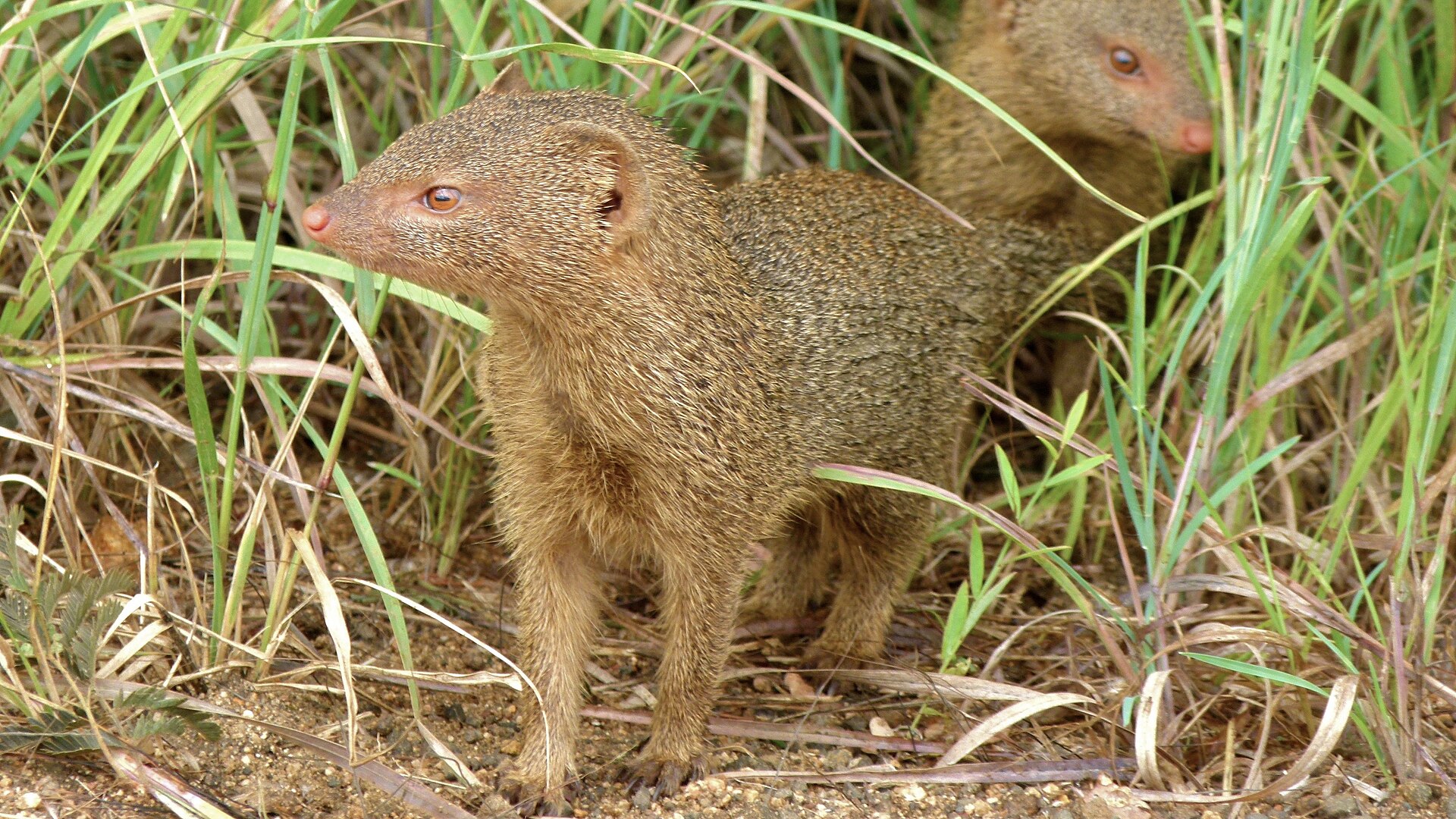
Slender Mongoose
The one most often mistaken for a rat: solitary, quick, and slim, with a reddish-brown coat and a distinctive black-tipped tail. Seen alone, darting for cover during the day. Genuinely useful to have around: it hunts small rodents, insects, and the odd snake.
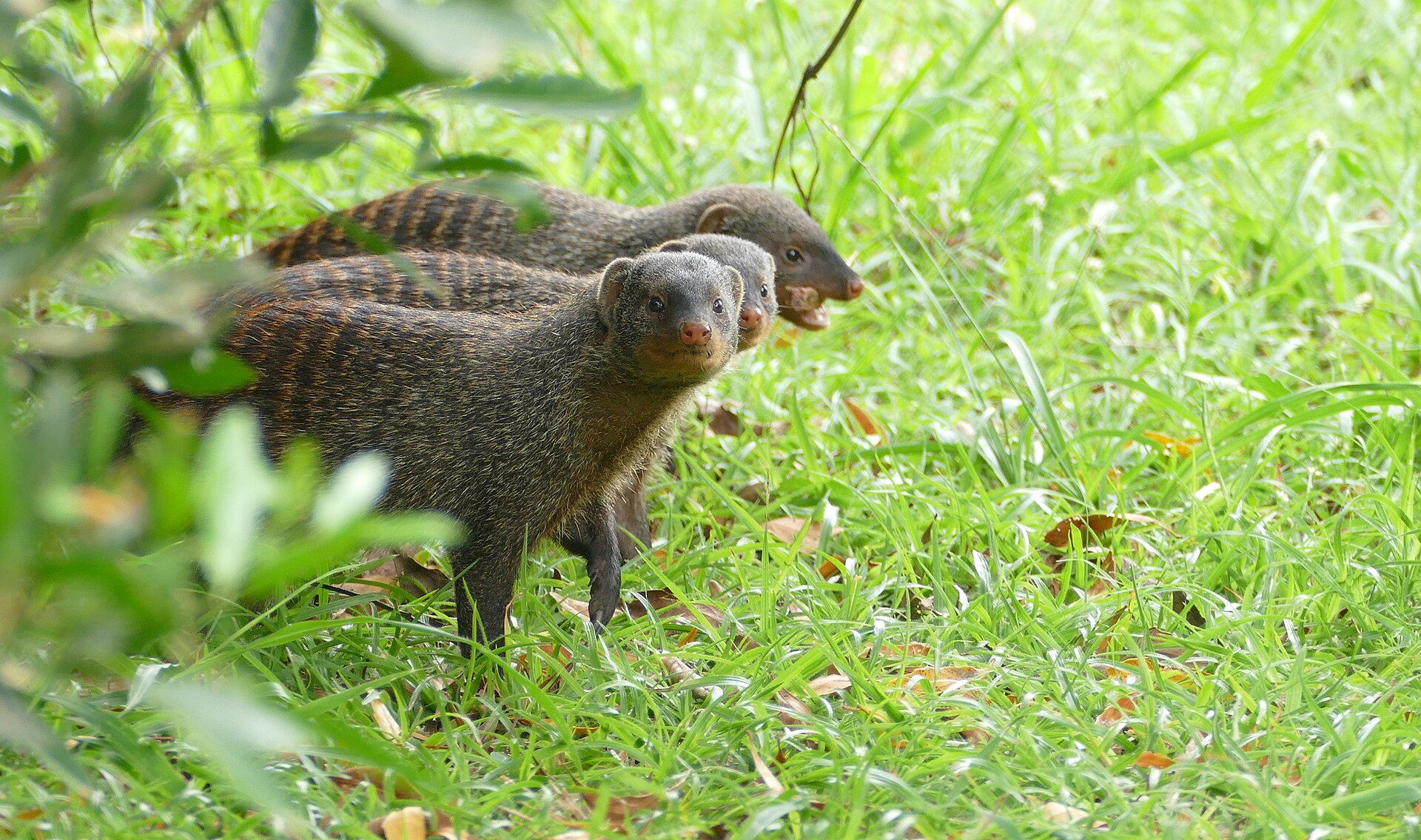
Banded Mongoose
Harder to mistake for a rat once you've seen one. They move in noisy, sociable troops of a dozen or more, digging in lawns and leaf litter for beetles and millipedes. Stockier than the slender mongoose, with dark bands across the back.
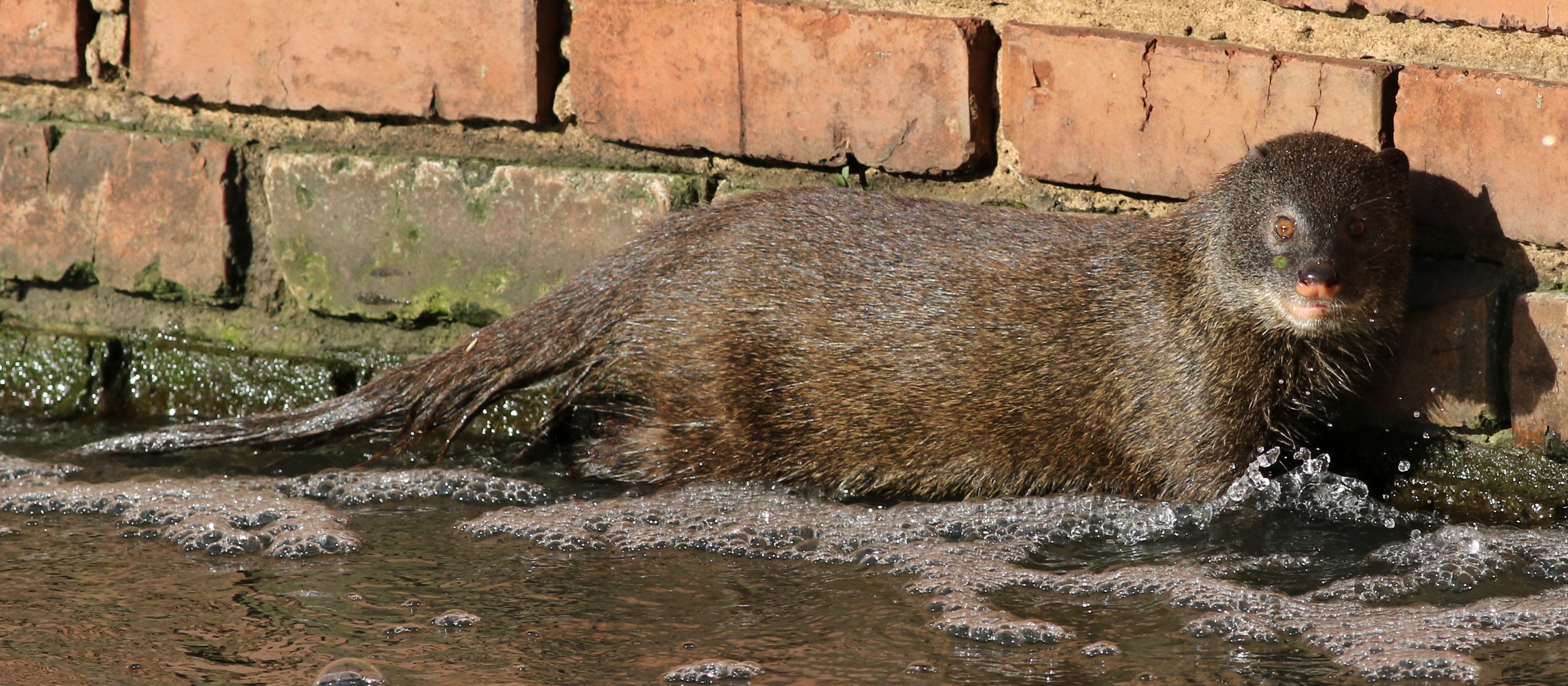
Water Mongoose
Also called the marsh mongoose: the biggest of the three and the one that sticks close to streams and damp ground, hunting crabs, frogs and fish with famously dextrous front paws. Solitary and mostly active at dawn, dusk and night.
Living alongside them
- They're not dangerous to people or pets, and don't raid houses the way monkeys do. They're after insects, not your kitchen
- If you keep chickens, a mongoose may take eggs or chicks given the chance. A secure, mongoose-proof coop is the fix, not removal
- They're genuinely good for the garden: both species help keep insect and small-rodent numbers down
- If you spot one, it's a sign your garden still has enough cover and prey to support real wildlife. Worth appreciating, not worrying about
The crying you hear at night
A loud, nasal wail that trails away at the end, repeated in bouts. It sounds uncannily like a human baby crying. That likeness is where the English name bushbaby comes from.
werner_m, CC BY-NCResidents here have been hearing it and seeing nothing. That is normal, and it is how this animal is usually recorded. It is a nagapie, Afrikaans for little night monkey, and properly a Thick-tailed Bushbaby (Otolemur crassicaudatus). The isiZulu name is isinkwe.
Check the time before you decide what you heard. The Trumpeter Hornbill on our bird page makes almost the same sound, and it is common on the Berea. The hornbill calls in daylight and is asleep after dark. A Barn Owl shrieks at night, but that is a harsh scream rather than a wail. So a crying baby at three in the morning, up in the trees, is the one worth reporting.
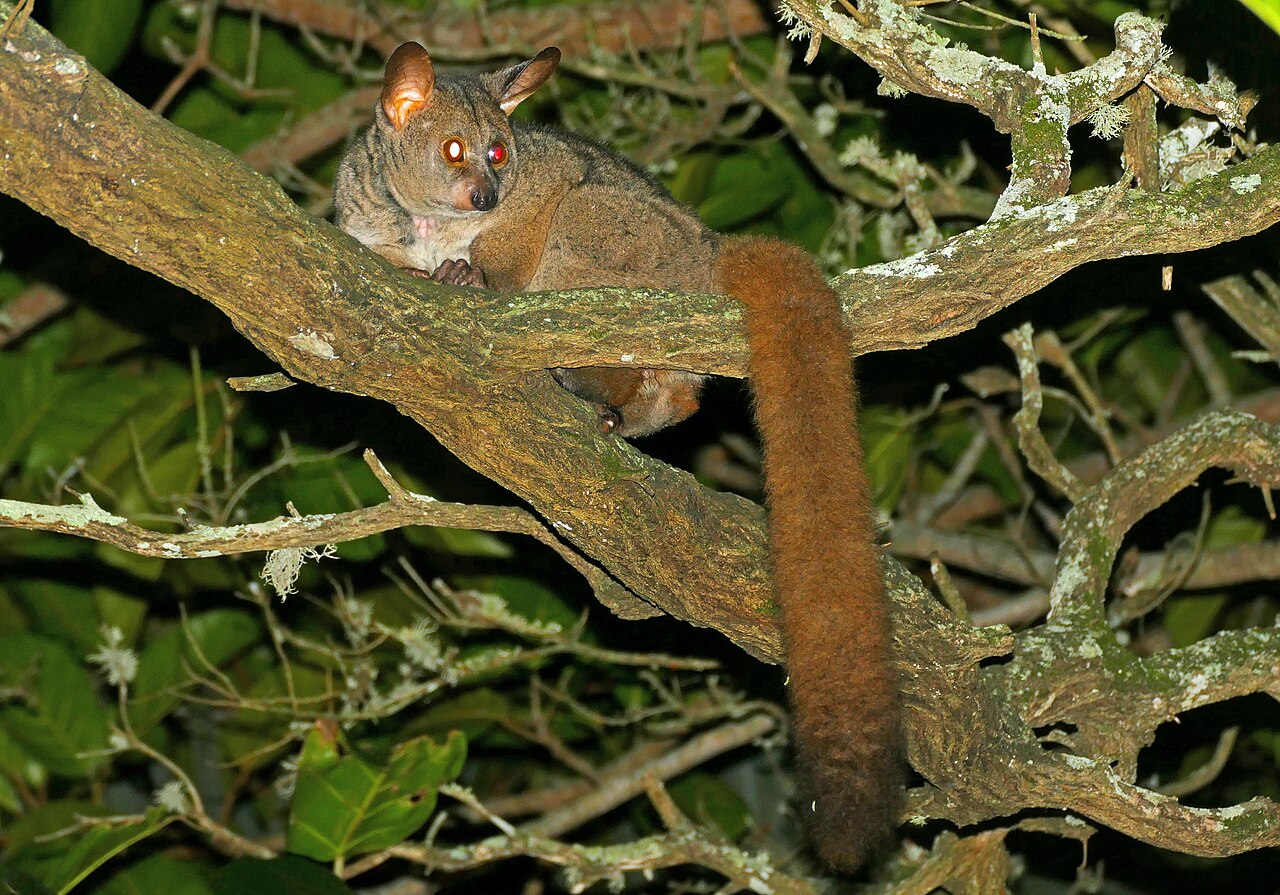
Photo: Bernard DUPONT, Wikimedia Commons, CC BY-SA 2.0
Taken at Isinkwe Bush Camp in northern KwaZulu-Natal. The camp is named after the animal.
🔦 Why you never see one
It is out only after dark, and it stays high in the canopy. It is also a serious jumper, crossing gaps of two metres between branches, so it moves through the treetops rather than along the ground. Your best chance is a torch. The eyes throw back a bright orange shine, and they are set in a face the size of a small cat's, with a tail thicker than its body.
🐕 The one thing that matters
Bring the dog's bowl in at night, and keep bird feeders tidy. Food left on the ground brings bushbabies down out of the trees, and that is where dogs catch them.
Please do not feed them, for the same reasons we ask nobody to feed the monkeys. In 2025 this species was listed as Near Threatened in South Africa. The threats named in that assessment are suburban ones: electric fences, power lines, roads and dogs.
📍 Are they really here?
Honestly, we cannot say yet, and that is why hearing one matters. There is no bushbaby on Pigeon Valley's species list, and no confirmed record inside the reserve. The nearest confirmed animals are around Westville and Kloof, roughly six kilometres west of us. Kloof Conservancy calls itself one of the very few places left in the eThekwini area where you still find them.
So if you hear it, please log it under Spotted and choose Thick-tailed Bushbaby. A recording on your phone is enough. This species is regularly identified from its call alone, with nobody ever laying eyes on the animal.
The shy ones you'll mostly miss
Pigeon Valley's official species list also includes two much shyer residents. You're far more likely to hear a rustle in the undergrowth than see either clearly, but it's worth knowing they're there.
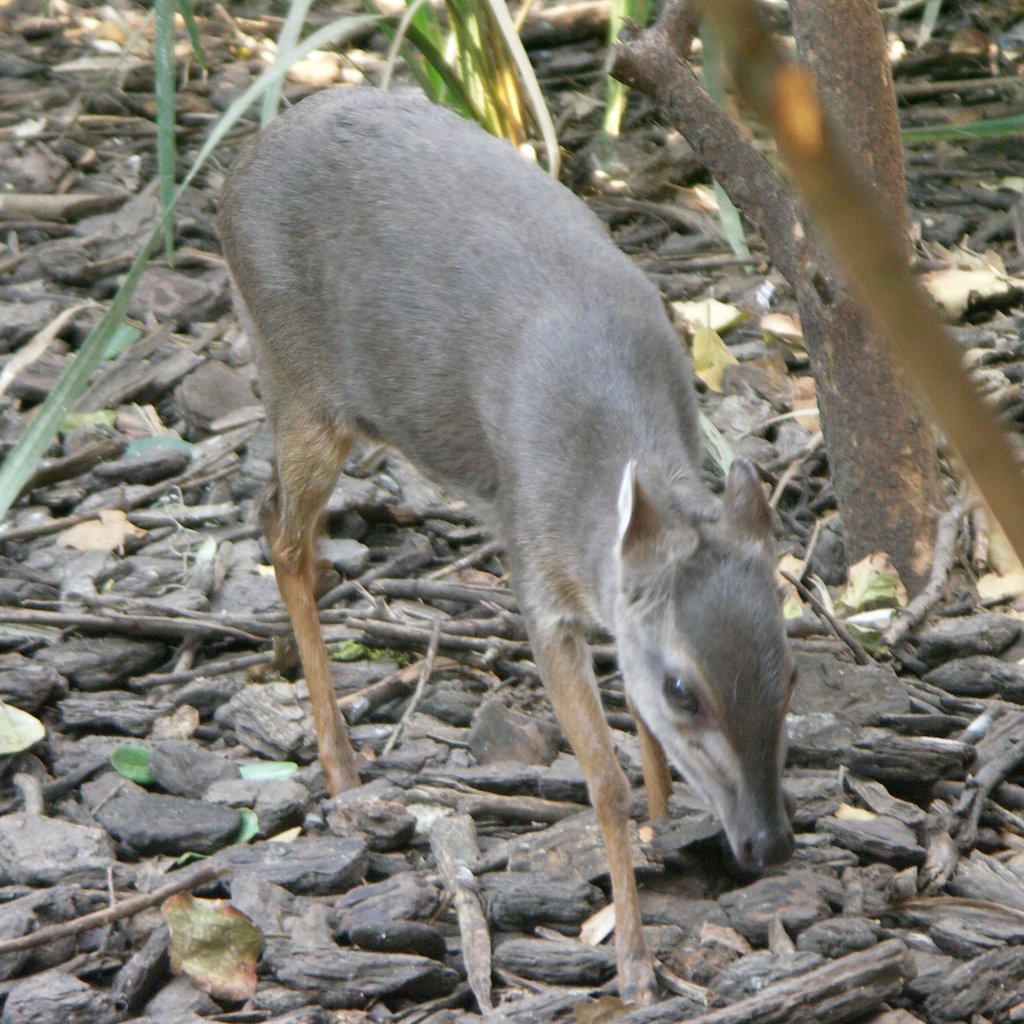
Blue Duiker
Africa's smallest antelope: barely knee-height, greyish with a reddish rump in the local subspecies. Shy, solitary and strictly a forest-floor browser, feeding on fallen fruit and leaves at dawn and dusk. If you glimpse one at all, it'll be a brief flash disappearing into cover.
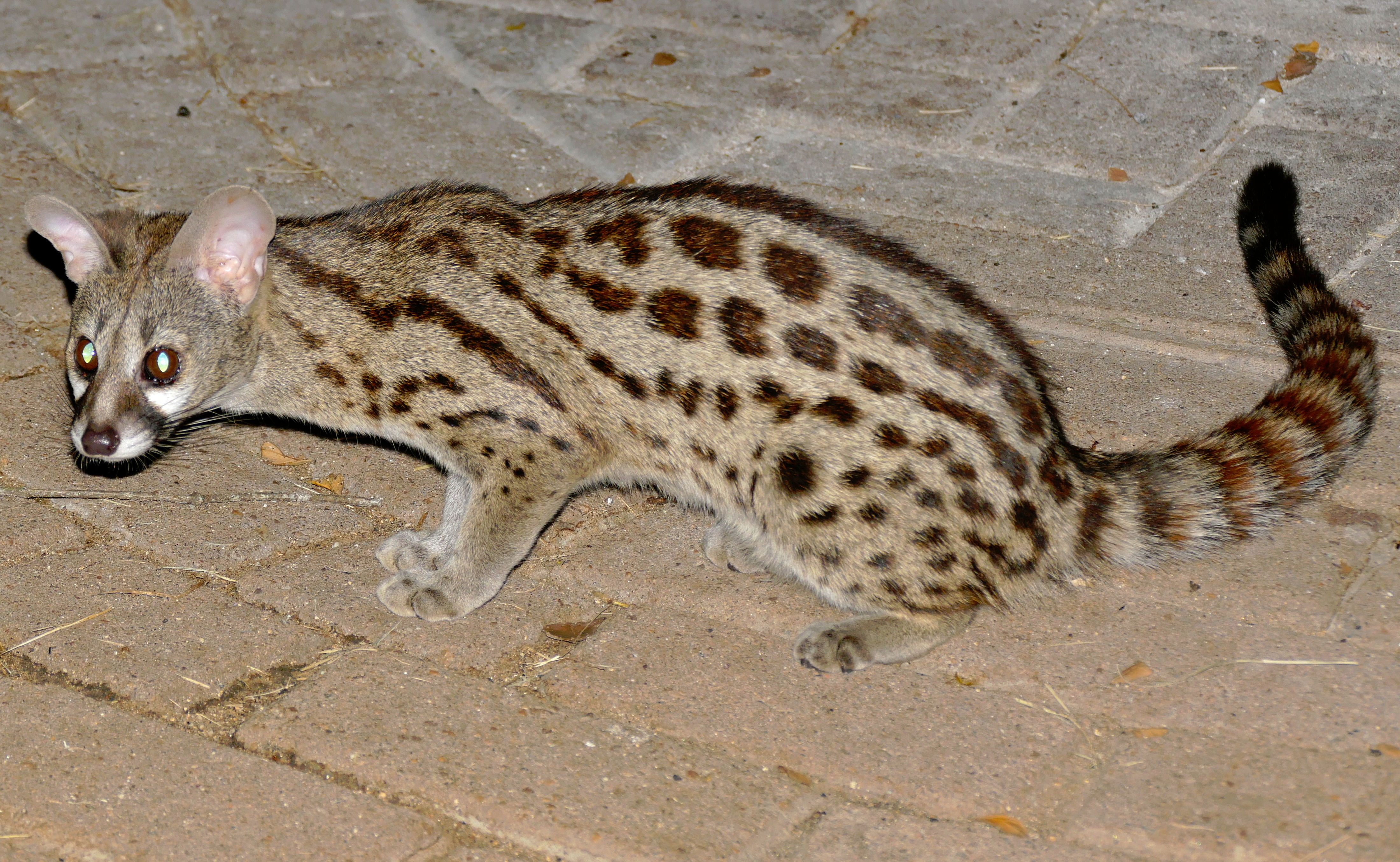
Cape Genet
Slender, spotted and cat-like, but not a cat at all. Genets are more closely related to civets and mongooses. Nocturnal and largely tree-dwelling, they're sometimes spotted on rooftops or garden walls after dark. Completely harmless to people, and useful around the garden for the same reason mongooses are: insects and rodents.