Birds of prey & owls
We are unusually lucky here. Crowned Eagles nest in Pigeon Valley, Gymnogenes raid the weaver colonies, and several pairs of owls work the big trees around the suburb every night. That includes, as one resident put it, the large ones that take care of the rats.
Rat poison kills the owls doing the job for free
This is the single most useful thing on this page. A poisoned rat does not die quickly. It gets slow and easy to catch first. That is exactly when an owl takes it. The poison then does to the owl what it did to the rat.
A pair of Spotted Eagle-Owls or a Barn Owl will work through hundreds of rodents in a season, every year, for nothing. Poison removes the rats once and removes the owls permanently. The rats come back faster than the owls do.
What works instead: close off what feeds them. Covered bins, no pet food left out overnight, no spilled birdseed, fallen fruit picked up, and rubble or woodpiles cleared. Snap traps in a covered box if you must. The same tidy-up also keeps snakes away, since they follow the rodents.
Right now in Manor Gardens: September
- Yellow-billed Kite: Yellow-billed Kites are arriving back for summer. Look up.
The owls
All three are strictly protected, and all three are far more likely to be heard than seen. If you have one roosting in a big tree, you are lucky. Leave it be and it will stay.
 🔍 Enlarge
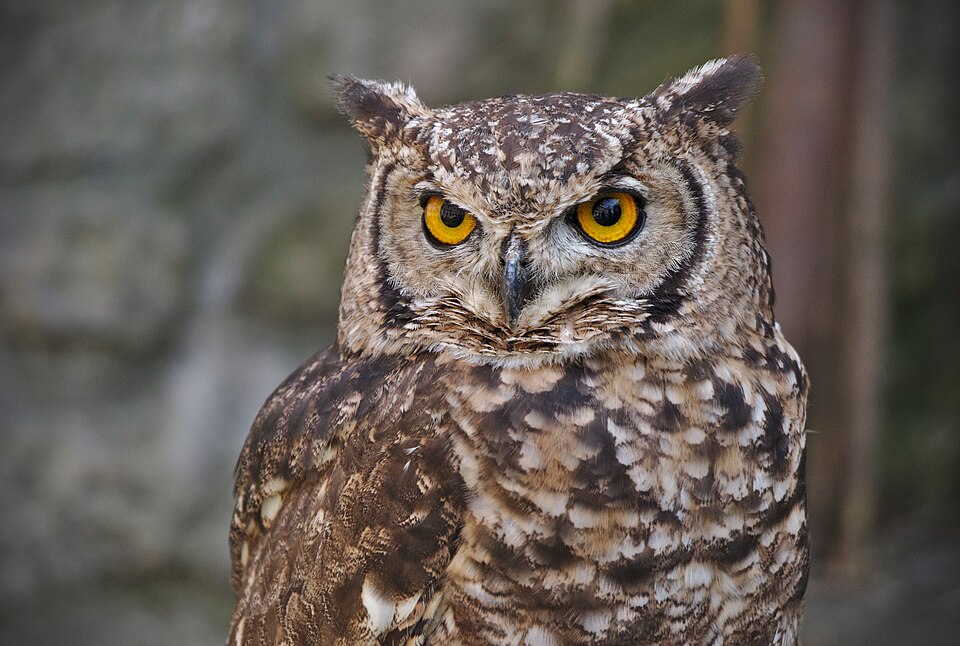
 Spotted Eagle-Owl
Bubo africanus · iSikhova
Here all year
A soft, carrying two-note hoot (HOO-hoo), often answered by its mate a moment later. Listen at dusk.
Tony Archer, CC BY-NC-SA 4.0The big one residents see most, and the one doing the rat control. Grey-brown, finely barred, with prominent ear tufts and startling yellow eyes. It hunts from a perch and takes rodents, large insects and the occasional bird. A pair will hold the same few blocks for years.
 🔍 Enlarge
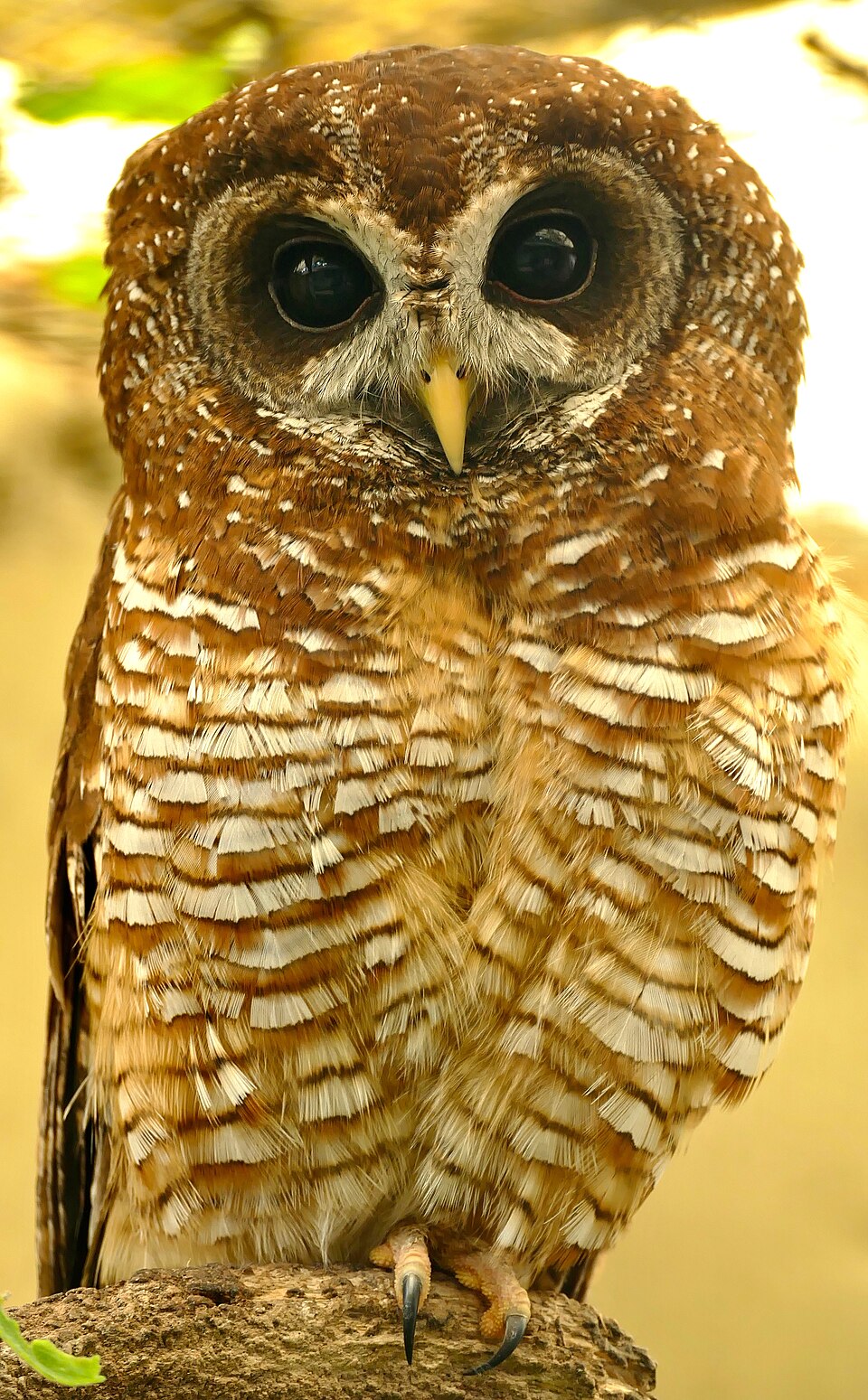
 African Wood Owl
Strix woodfordii
Here all year
A rhythmic hoot often written as who-who-are-you, from deep inside dense canopy after dark.
Lisa Boocock, CC BY-NC-SA 4.0Smaller than the eagle-owl, with no ear tufts and huge dark eyes rather than yellow ones. It prefers thick old trees and shady gardens, which is why the Berea suits it. Hunts insects, frogs and small rodents low down among the branches.
 🔍 Enlarge
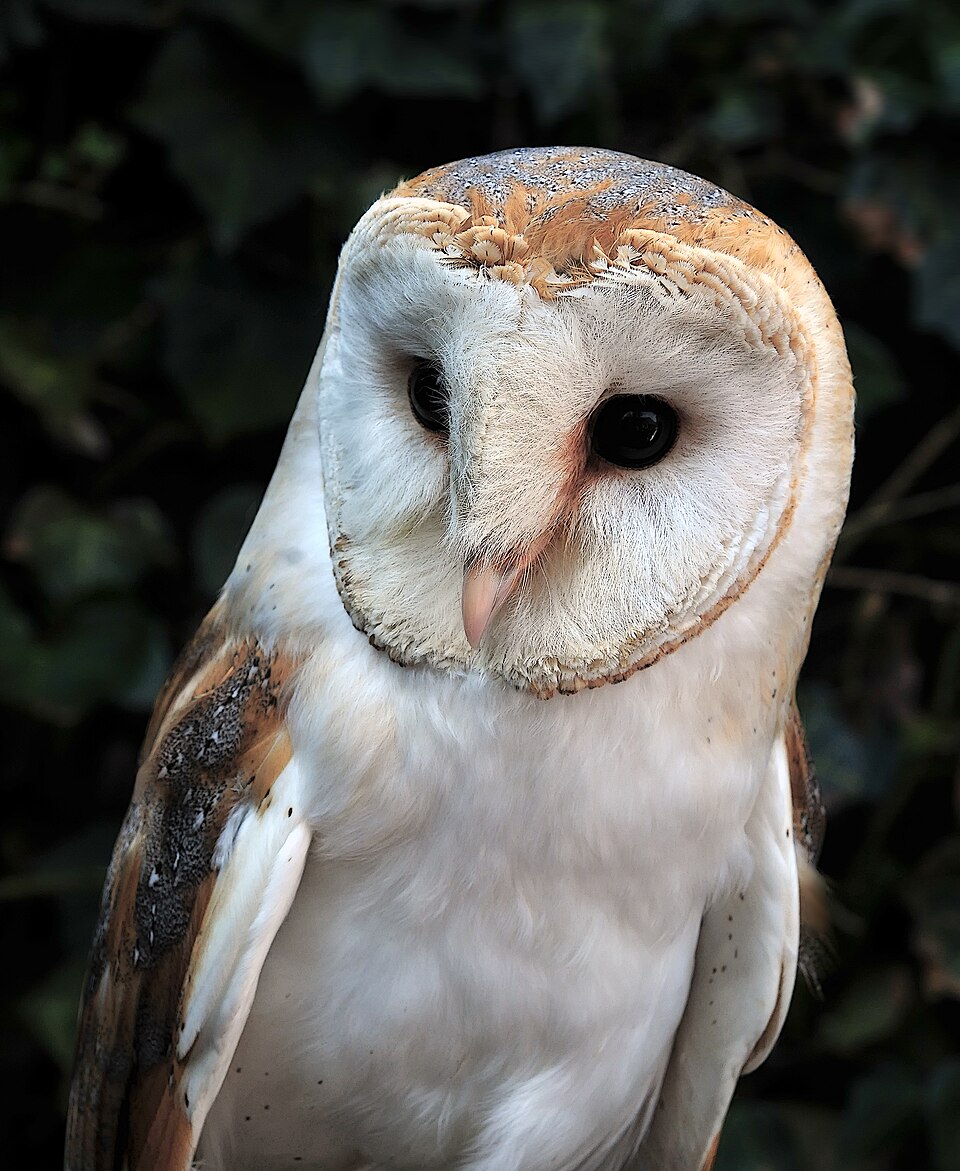
 Barn Owl
Tyto alba
Here all year
No hoot at all: a long, harsh shriek that has frightened generations of people walking home at night.
Tony Archer, CC BY-NC-SA 4.0Unmistakable white heart-shaped face and dark eyes, pale golden back, and a silent, moth-like flight. Roosts in roofs, ceilings and outbuildings. A single pair can take hundreds of rodents in a season, which makes them worth far more to a neighbourhood than any poison.
Eagles, hawks and kites
 🔍 Enlarge
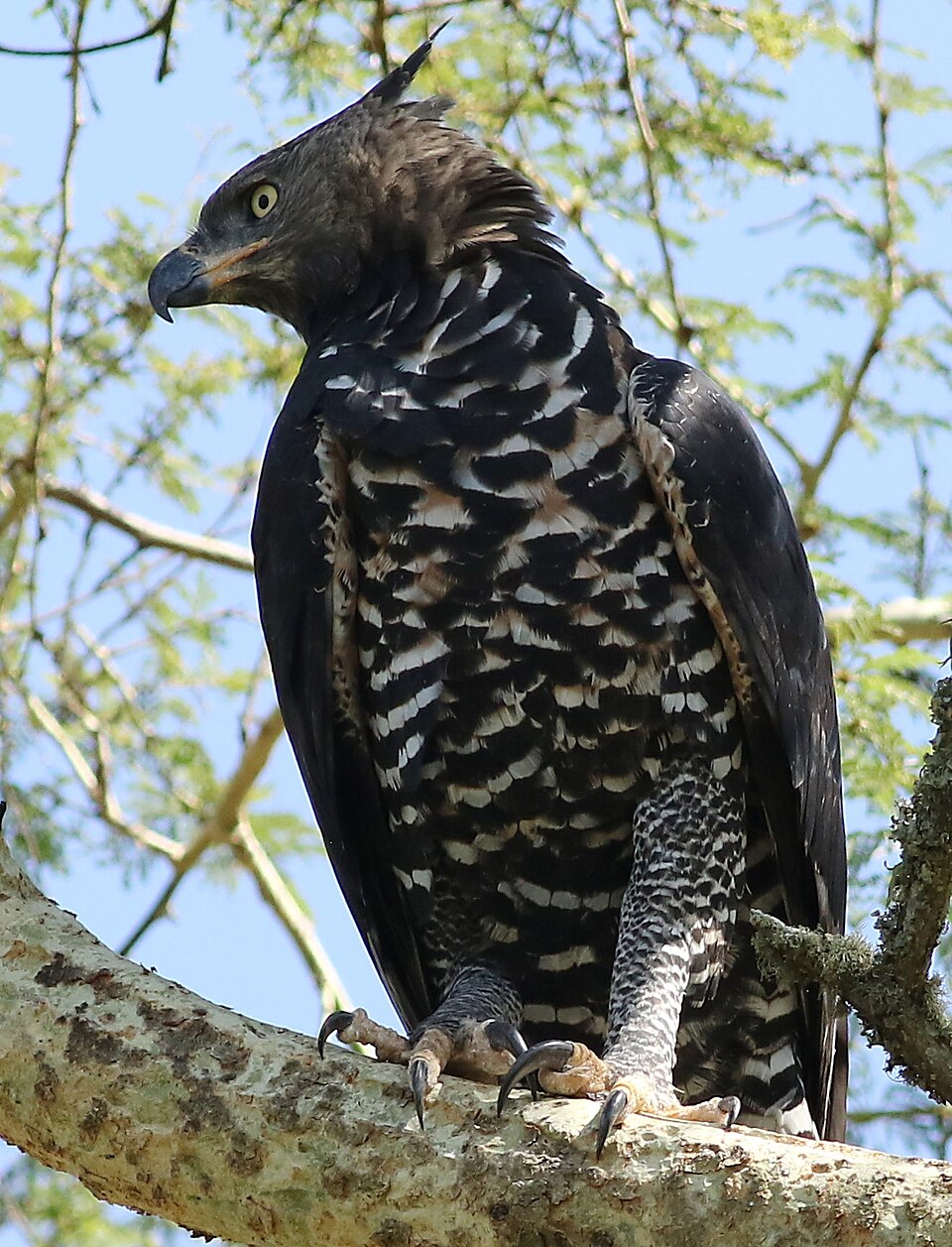
 African Crowned Eagle
Stephanoaetus coronatus · uKhozi
Here all year
A ringing, far-carrying kewee-kewee-kewee delivered in an undulating display flight high overhead.
African Bioacoustics Community, CC BY-NC-SA 4.0Africa's most powerful eagle, and the Berea has one of the highest urban densities anywhere. They nest in Pigeon Valley and Burman Bush. Heavily barred underneath with a ragged crest, and startlingly big when one drifts over the garden. They mainly hunt hyrax, monkeys and duiker, but a small dog or cat left outside is within their range, so it is worth knowing they are here. Adults look nothing like the pale immatures.
 🔍 Enlarge
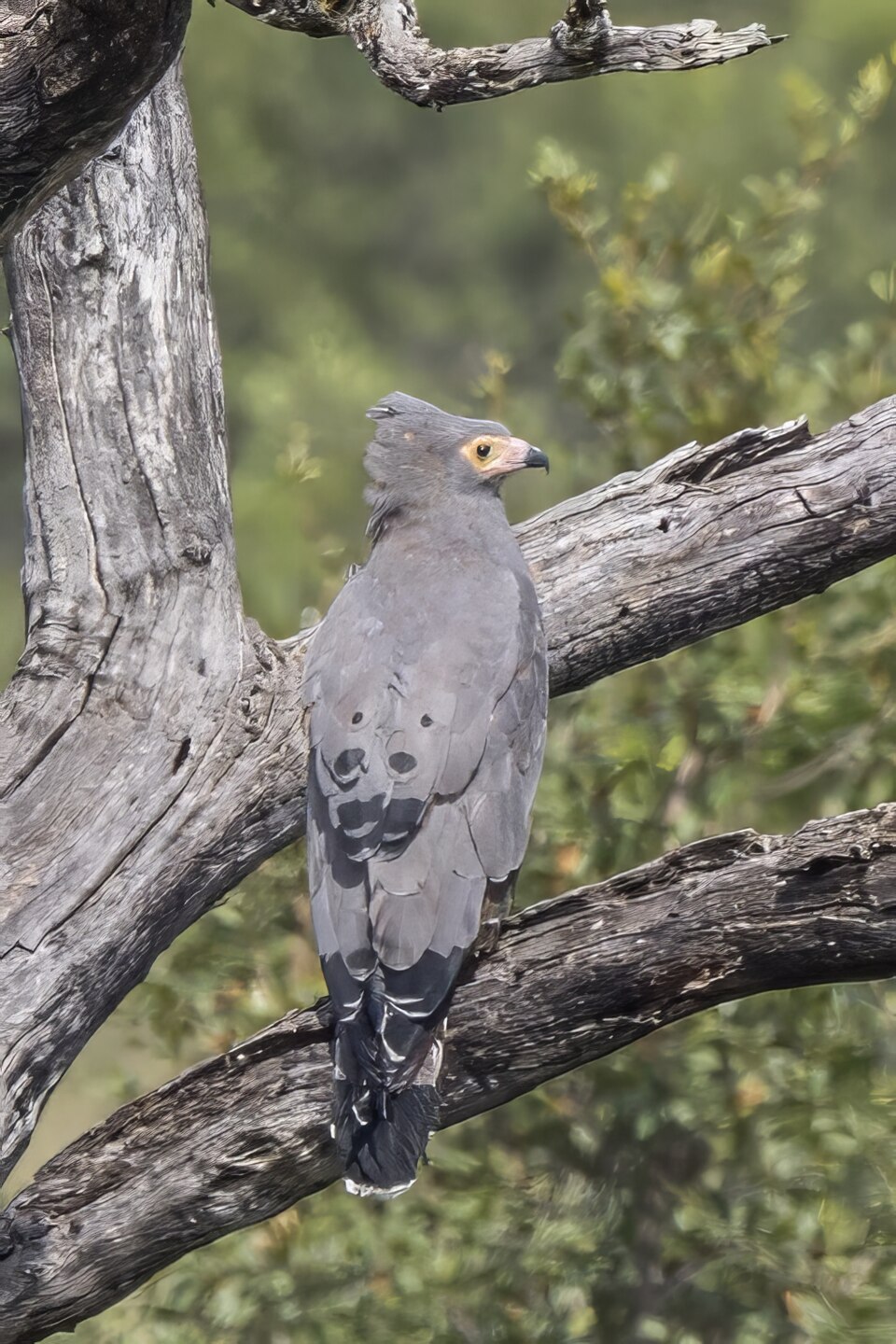
 African Harrier-Hawk
Polyboroides typus
Here all year
A drawn-out, mournful whistle, though it is more often noticed by the commotion of every other bird mobbing it.
Nature sounds by Simply Birding, CC BY-NC-ND 4.0Still widely called the Gymnogene. Pale grey with a bare yellow face that flushes red when it is agitated. Its trick is unique: double-jointed legs let it hang upside down on a trunk or palm and reach a whole leg into a cavity or weaver nest to raid it. Watch one work a colony and you will never mistake it again.
 🔍 Enlarge
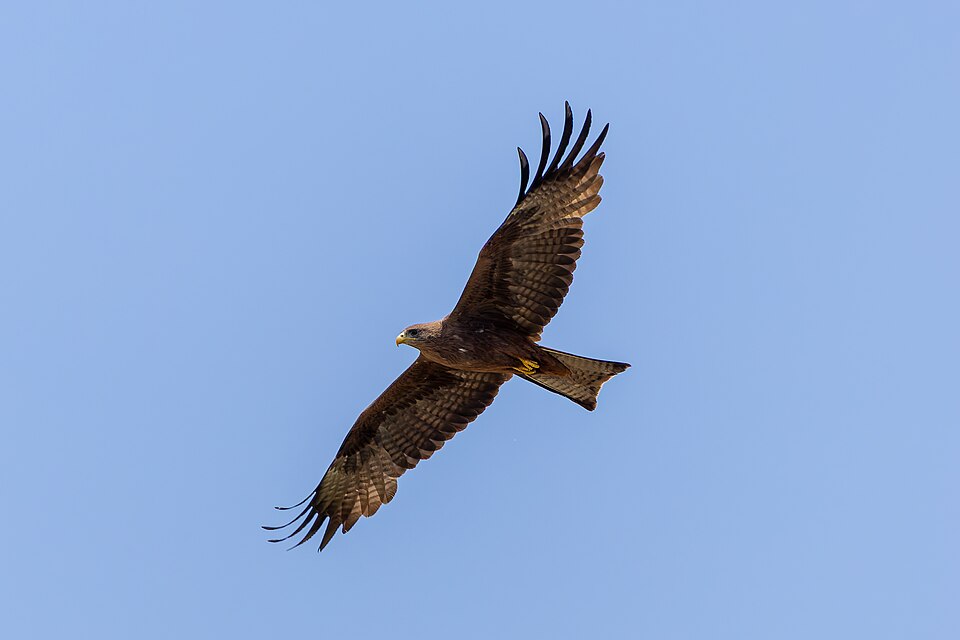
 Yellow-billed Kite
Milvus aegyptius
Summer visitor · Aug–Mar (in season now)
A shrill, quavering whinny from high up, usually while circling.
African Bioacoustics Community, CC BY-NC-SA 4.0A summer visitor that returns to Durban around August and leaves again by autumn, one of the clearest signs the season has turned. Brown, with a bright yellow bill and, most usefully, a forked tail that twists constantly as it steers. You will nearly always see this one in the air rather than perched.
Seen one? Put it on Spotted. A photo also settles an identification far better than any description. Gymnogenes, Crowned Eagles and kites get mixed up constantly in flight.