Birds of Manor Gardens
Residents asked for this one: partly to put names to the birds in their own gardens, and partly to teach their children. So each bird starts with what you hear, because on the Berea that is almost always how you notice one first.
Right now in Manor Gardens: September
- Village Weaver: Weavers are back at the colonies and the males have started building.
- Black-collared Barbet: Barbets are duetting hard as the breeding season opens.
- Amethyst Sunbird: Sunbirds are working the winter aloes and coral-tree flowers.
Seen something not on this list? Post it on Spotted. That is where neighbours' own photos live, and it is a far better record of what is actually around than any guide.
 🔍 Enlarge
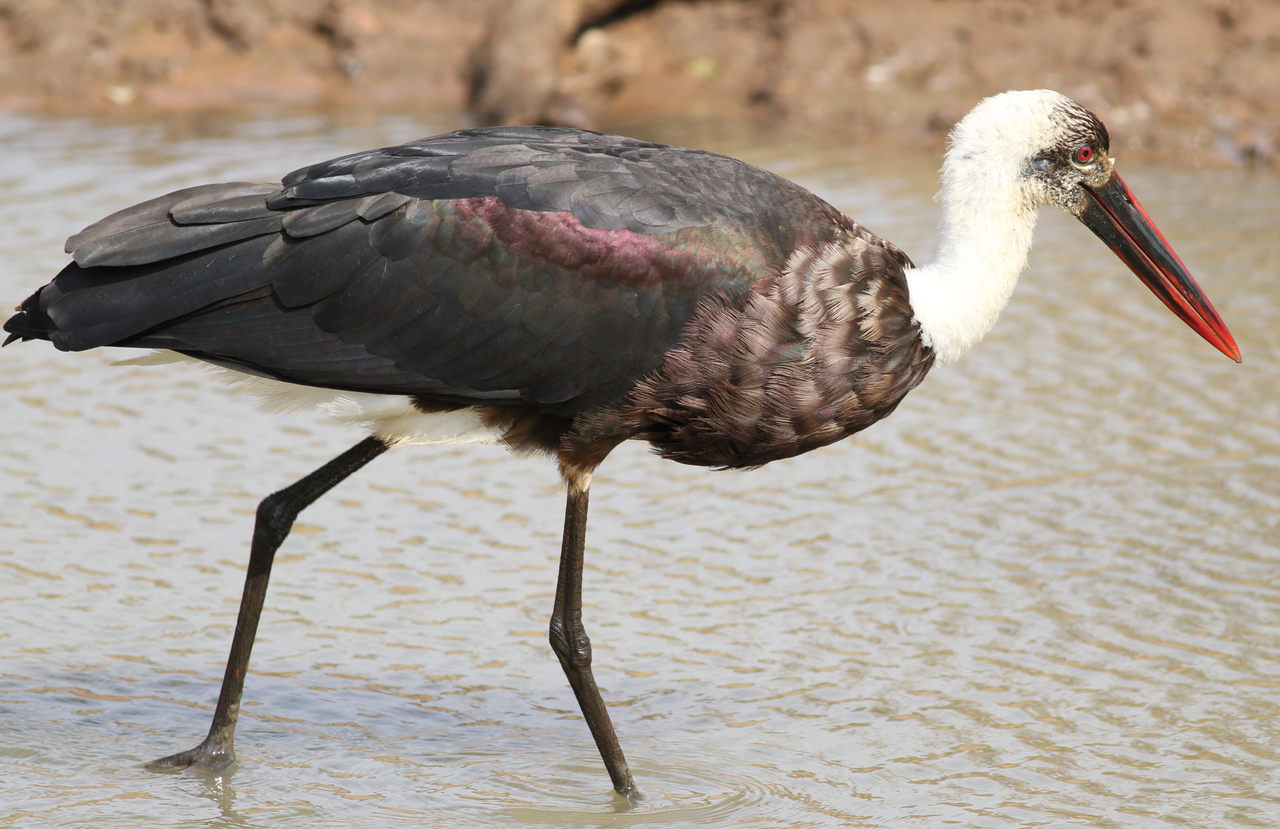
 Woolly-necked Stork
Ciconia microscelis
Here all year
Almost silent. What you hear instead is a dry clattering as it snaps its bill. Storks have very little voice and do most of their talking this way.
Large, glossy dark, with a bare black cap, a deep red eye and the thick white woolly neck that names it. The long dark bill has a dull red tip. Its story here is remarkable: in the 1980s there were perhaps thirty breeding pairs in the whole country, confined to Kruger and northern Zululand, and it was described as shy. It is now a familiar sight across urban KwaZulu-Natal, nesting over neighbourhood streets, hunting toads along verges and standing about on roofs, railings and swimming-pool surrounds. People often call it a crane: a stork flies with its neck stretched straight out, a heron folds its neck back into an S, and true cranes are grassland birds that do not perch on buildings at all.
 🔍 Enlarge
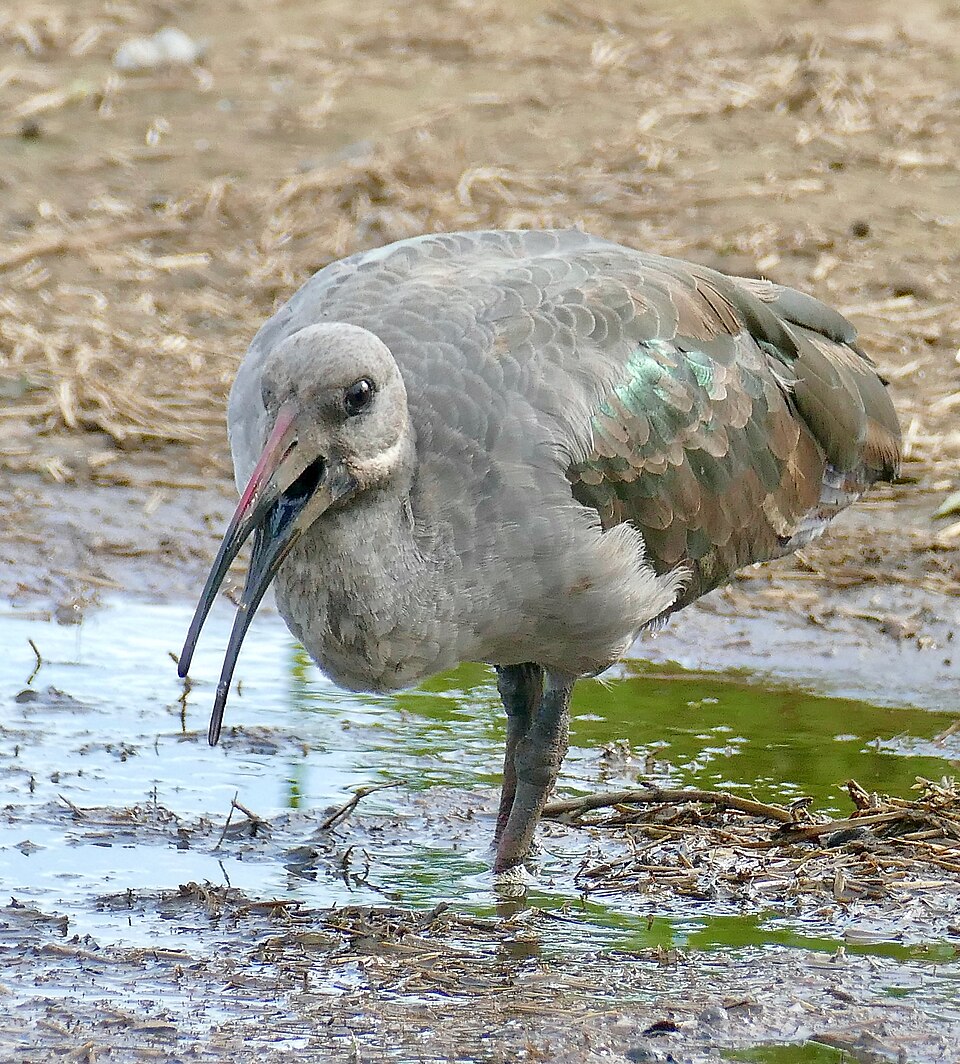
 Hadeda Ibis
Bostrychia hagedash · iNkankane
Here all year
The alarm clock nobody set. A shrieking HAA-HAA-HAA-de-dah, usually at dawn, usually directly above your bedroom.
Lynette Rudman, CC BY-NC-SA 4.0Everyone knows the noise; fewer people have looked closely at the bird. In good light the dull grey wing turns iridescent green and purple, and the long curved bill has a red stripe along the top. They probe lawns for worms and beetles, which is why they love a well-watered garden.
 🔍 Enlarge
  🔍 Enlarge
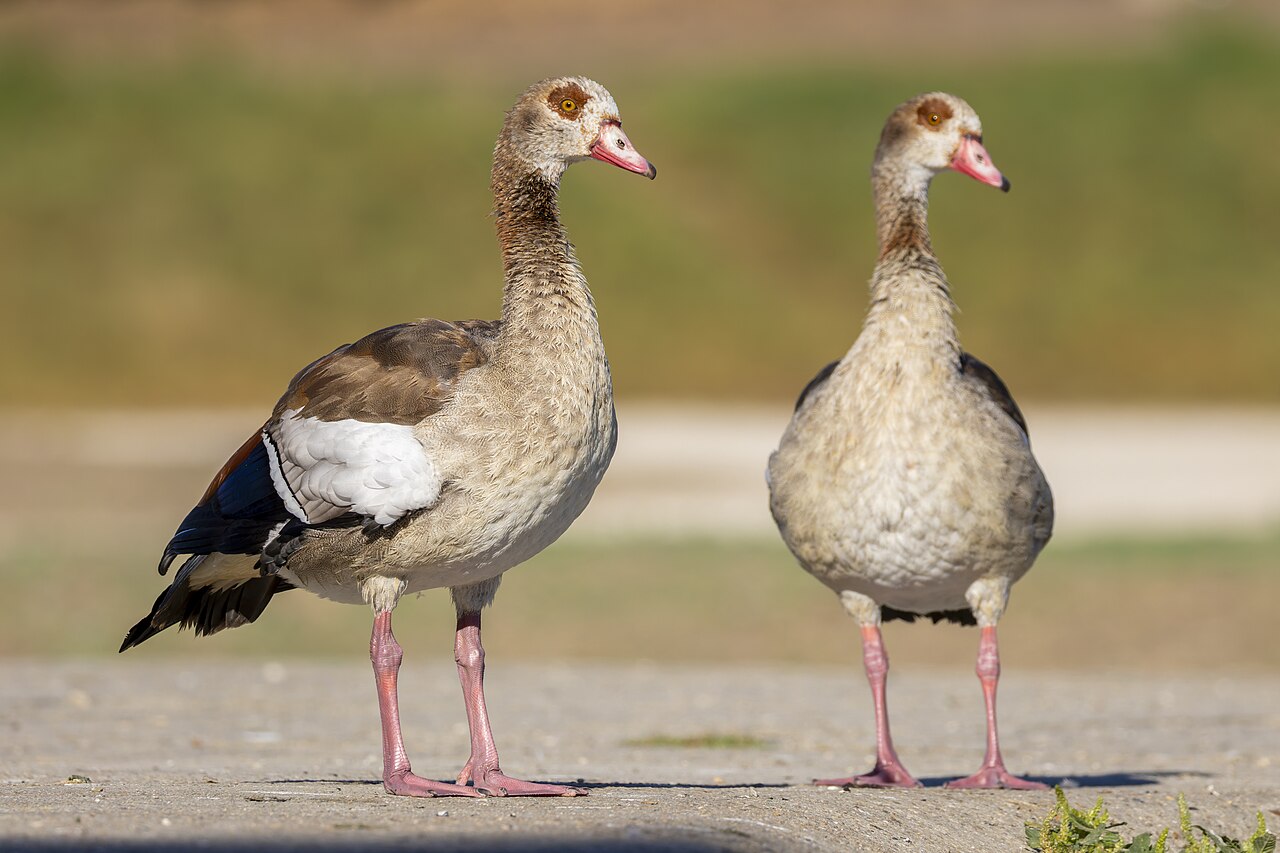
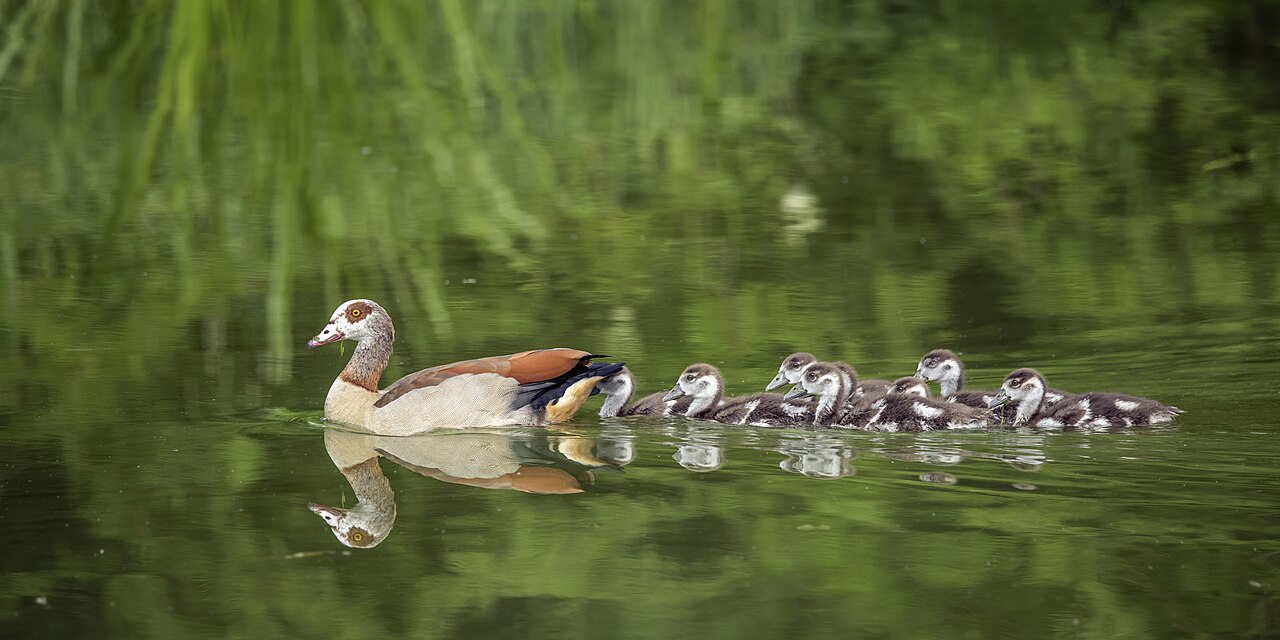
 Egyptian Goose
Alopochen aegyptiaca · iLongwe
Here all year
A rasping, klaxon-like honking that carries right across a suburb, very often from a roof. The surprise is which bird is making it: the loud raucous racket is the FEMALE. The male answers with a quiet, breathy hiss, so a noisy pair sounds oddly one-sided.
Richard White, CC BY-NC-SA 4.0Not really a goose at all. It is a shelduck, closer kin to ducks than to true geese. Look for the chocolate smudge around a pale eye, a second dark patch in the middle of the belly, pink legs and a pink bill; in flight the wings flash startling white. They pair for life and go about in twos, so a single bird usually means the other is sitting on eggs nearby. Around here you are most likely to meet one paddling on a swimming pool, which they take to as readily as a dam. A pair will happily bring a line of goslings to yours. They also nest surprisingly high, on flat roofs and in chimneys, which is why the honking sometimes comes from directly above your ceiling. Give a family with goslings a wide berth: a parent will square up to a dog without a moment's hesitation, and usually wins.
 🔍 Enlarge
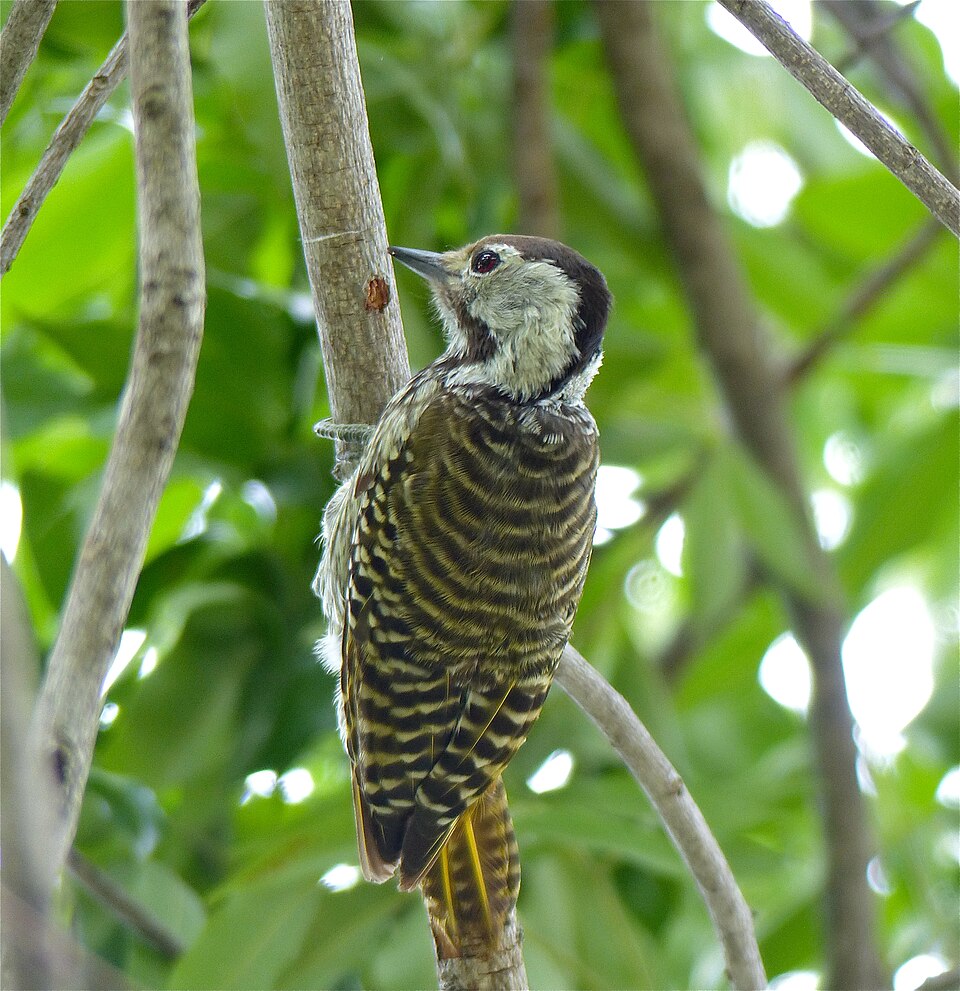
 Cardinal Woodpecker
Dendropicos fuscescens
Here all year
A soft, fast drumming on a dead branch, and a sharp krrek-krrek. You hear it before you see it. A neighbour described exactly that.
JMK, CC BY-SA 3.0Our smallest woodpecker, roughly sparrow-sized, working its way up trunks and thin branches in short hops. Streaked underneath, barred on the back. The male has a red patch on the back of the head; the female's is black. Pairs stay together and call to each other as they forage.
 🔍 Enlarge
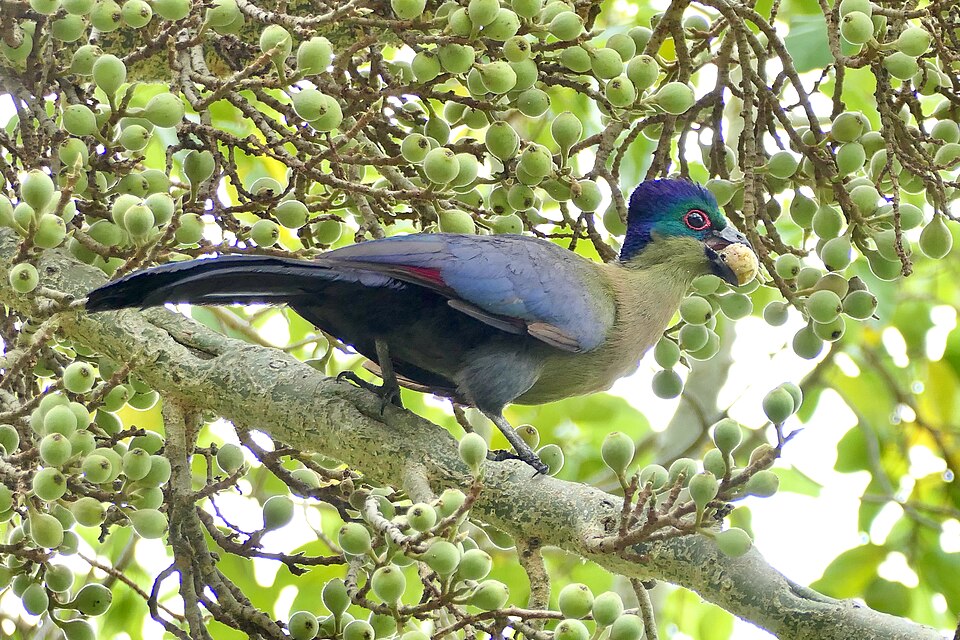
 Purple-crested Turaco
Tauraco porphyreolophus · iGwalagwala
Here all year
A loud, throaty series of kok-kok-kok building in speed: a proper jungle noise coming out of a suburban fig tree.
margaretburger, CC BY-SA 4.0KwaZulu-Natal's provincial bird and the most spectacular thing likely to visit your garden. Mostly it looks dark green and purple until it flies, when the wings flash brilliant crimson. The red comes from turacin, a pigment found nowhere else in the animal kingdom. Follows fruiting figs and syringas.
 🔍 Enlarge
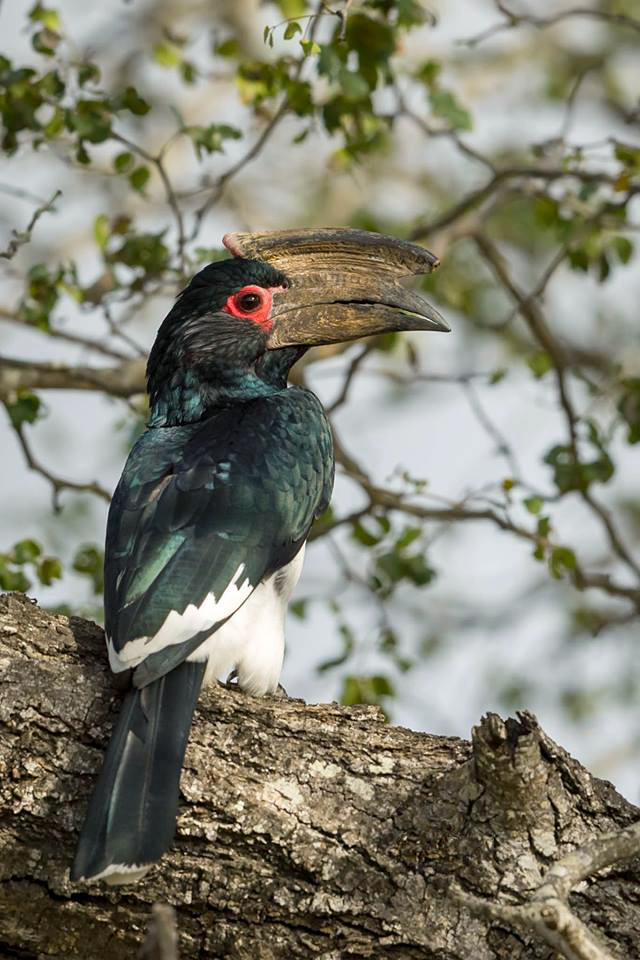
 Trumpeter Hornbill
Bycanistes bucinator · iKhunatha
Here all year
A long, rising wail exactly like a baby crying. People genuinely go outside to check. Once you know it, you will hear them all over the Berea.
African Bioacoustics Community, CC BY-NC-SA 4.0Big, black-and-white, with a heavy bill topped by a hollow casque. They travel in noisy parties through the canopy after figs, and the wingbeats are loud enough to hear from the ground. The female seals herself into a tree cavity to nest, and the male feeds her through a slit.
 🔍 Enlarge
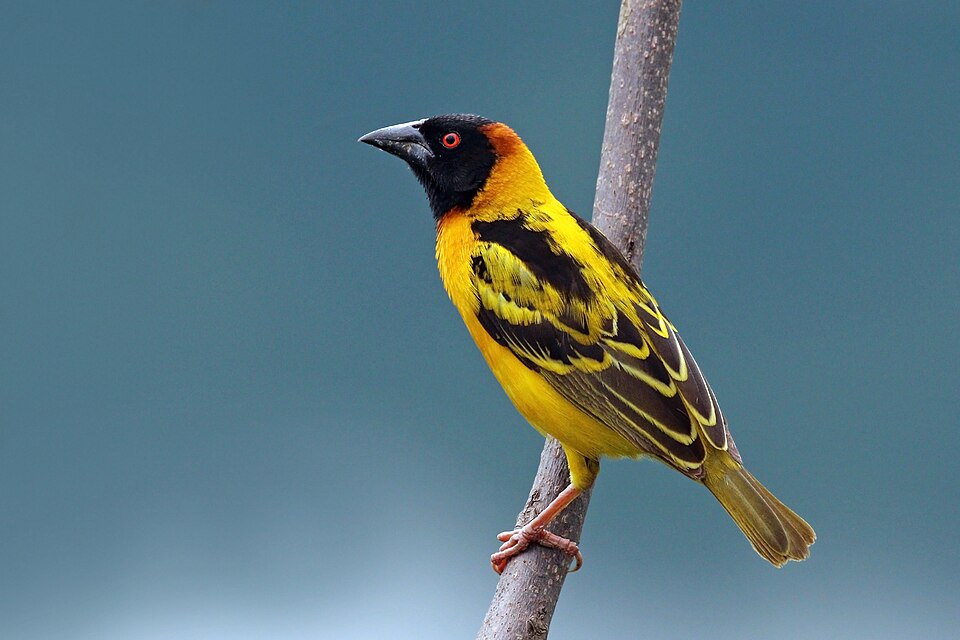
 Village Weaver
Ploceus cucullatus · iHlokohloko
Here all year · best Aug–Mar. In season now
A busy, buzzing, chattering colony, like a swarm mixed with static. Loudest through spring and summer.
Richard White, CC BY-NC-SA 4.0The best free entertainment in any Durban garden. The male strips palm and grass leaves and weaves a hanging nest in a few days, then hangs beneath it flapping to advertise. The female inspects it, and if it is not up to standard she tears it apart and he starts again. Some males build and lose five or six nests in a season.
 🔍 Enlarge
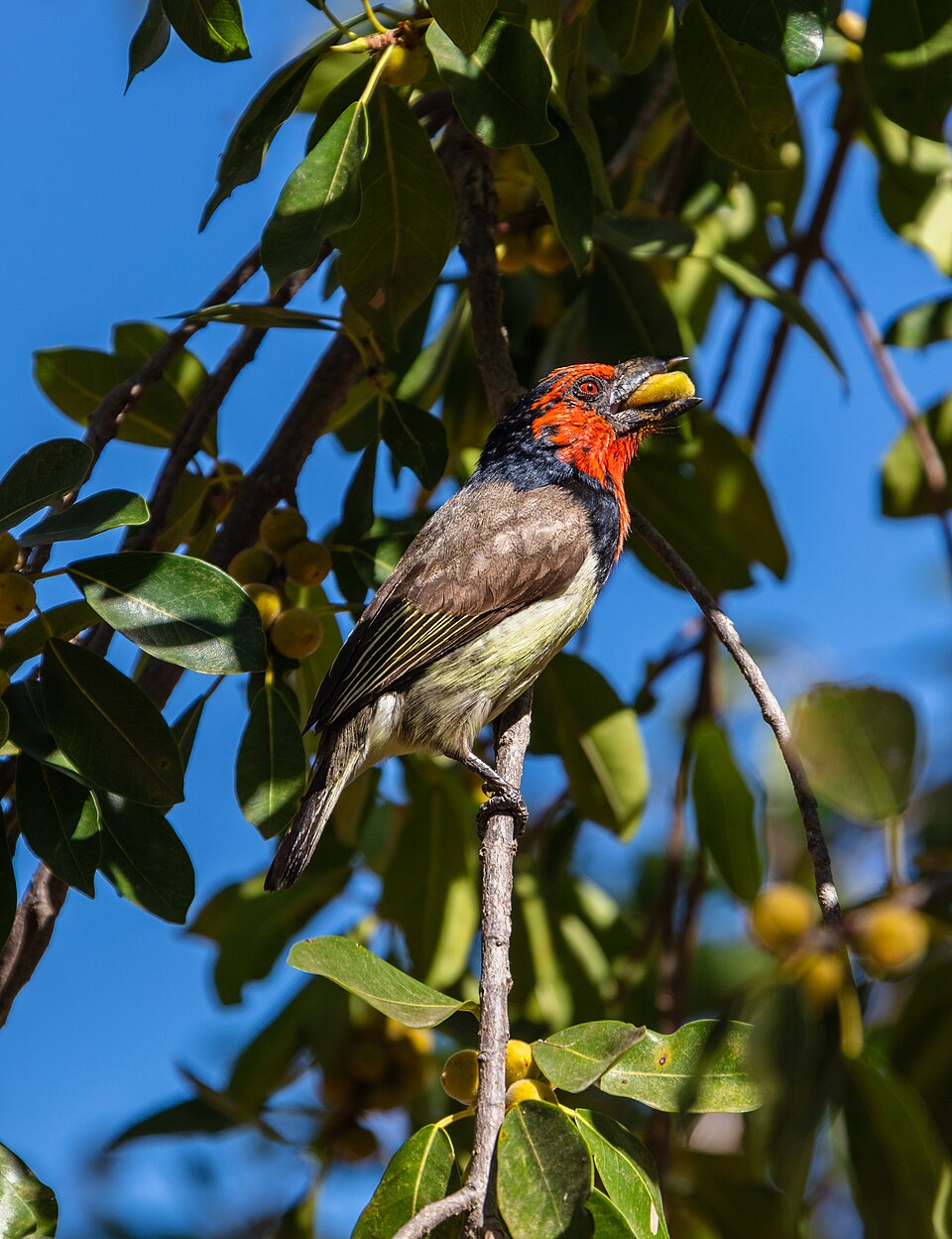
 Black-collared Barbet
Lybius torquatus
Here all year · best Aug–Dec. In season now
A duet: two birds sitting together going too-puddly too-puddly in perfect time. Once you spot that it is two birds and not one, you cannot unhear it.
JMK, CC BY-SA 4.0Chunky, with a scarlet face and a broad black collar. Pairs sing together to hold their territory, often from a bare branch. They nest in holes they chisel in dead wood, so leaving a dead limb standing is a real kindness.
 🔍 Enlarge
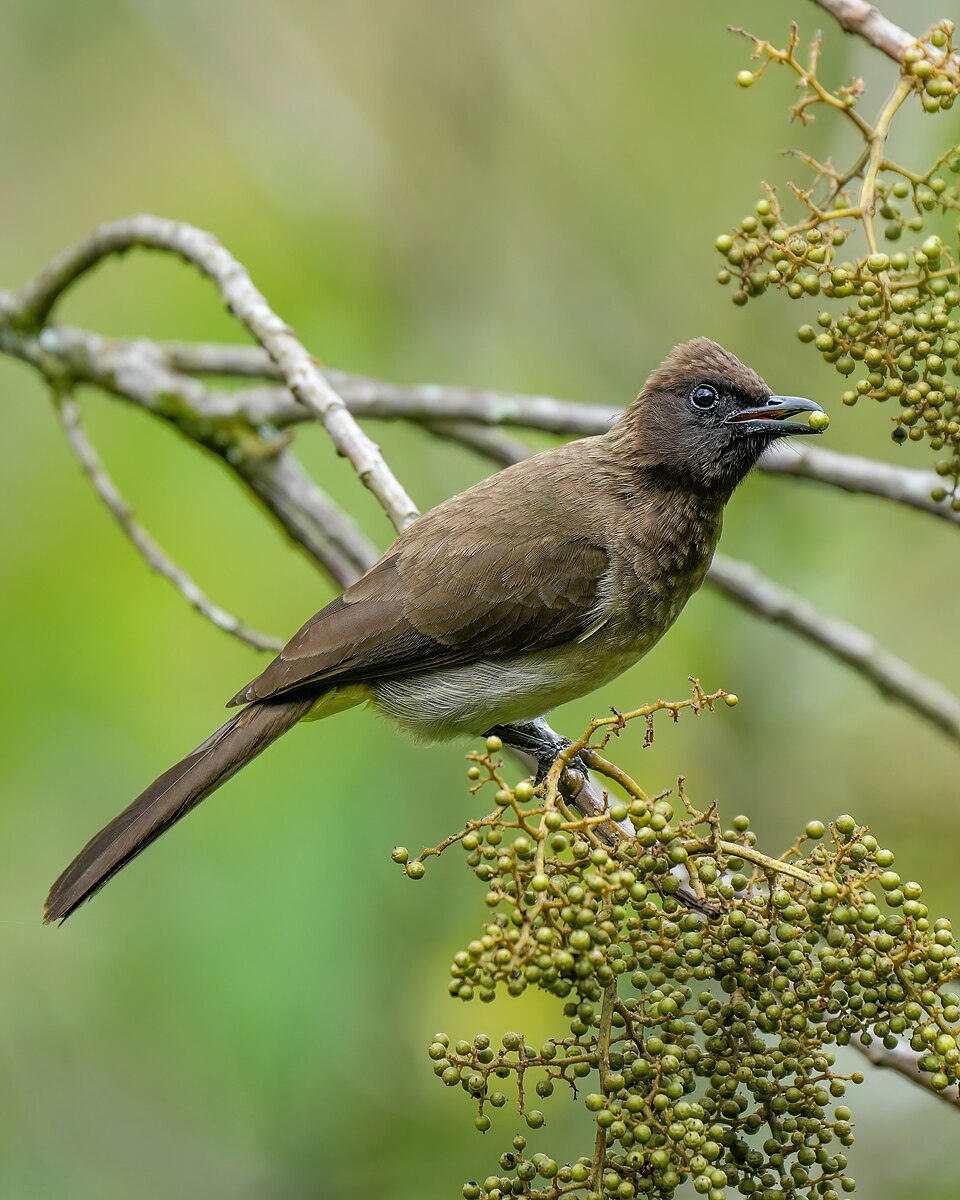
 Dark-capped Bulbul
Pycnonotus tricolor
Here all year
A cheerful, liquid chatter often written as sweet-potato, and a scolding rattle when a cat appears.
JMK, CC BY-SA 4.0Probably the most common garden bird here, and a good one to learn first. Brown, with a neat dark crest and a bright yellow patch under the tail. Bold around people, fond of fruit, and reliably the first bird to tell the whole garden that something is wrong.
 🔍 Enlarge
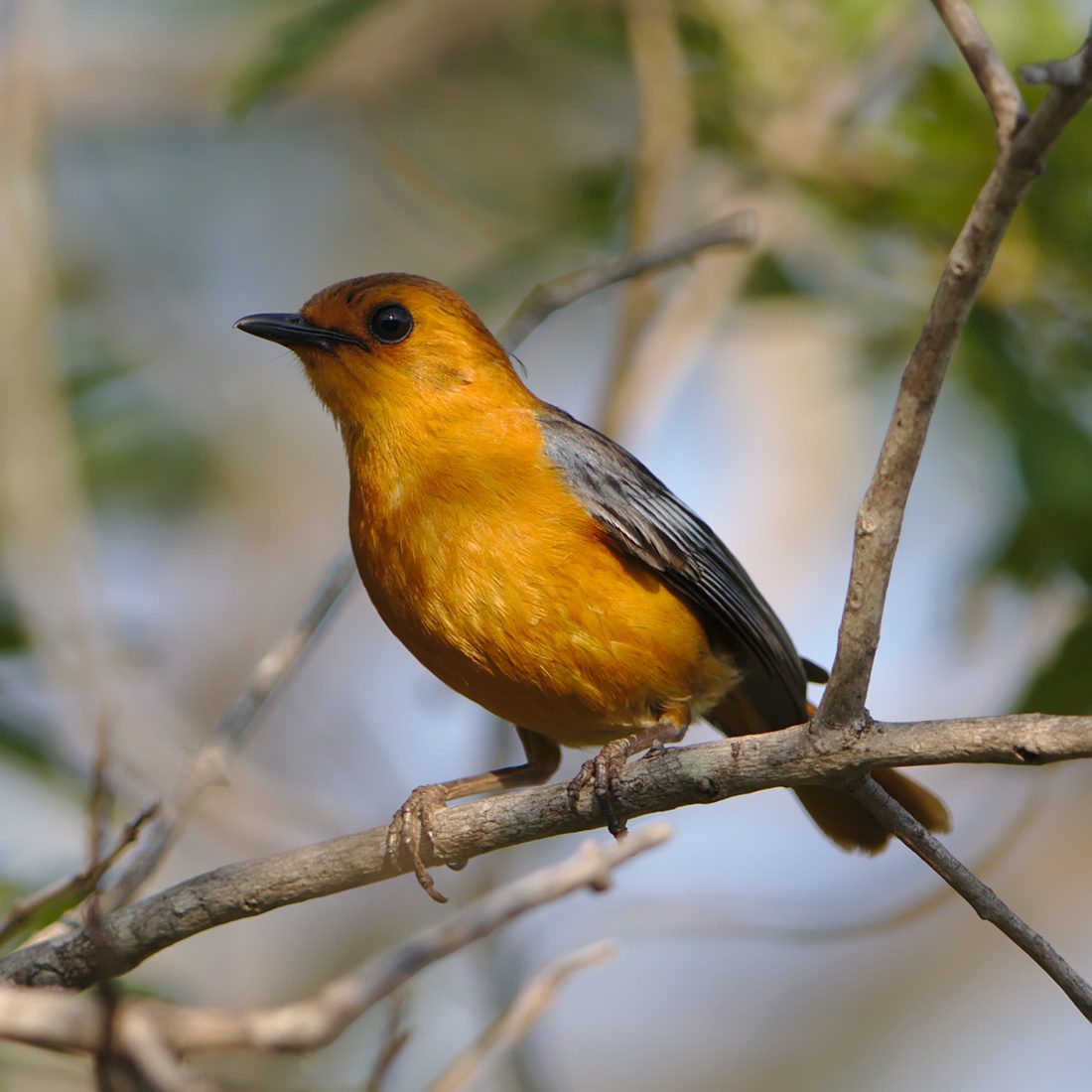
 Red-capped Robin-Chat
Cossypha natalensis
Here all year
A plaintive, trembling two-note call, and a fluty song that borrows freely from every other bird in the garden. It is a fine mimic, so a strange bird you cannot place is often this one showing off.
suncana, CC BY 4.0Also called the Natal Robin, and the bird on the Pigeon Valley walk posters. Pumpkin-orange face, throat, breast and tail, with steel-blue wings and back. Unmistakable once you have seen it, though it is shy and stays low in shaded thickets. Ubiquitous in Pigeon Valley and common in any Berea garden with dense cover and deep leaf litter. It was first described to science from Durban itself in 1840, which makes it about as local as a bird can be.
 🔍 Enlarge
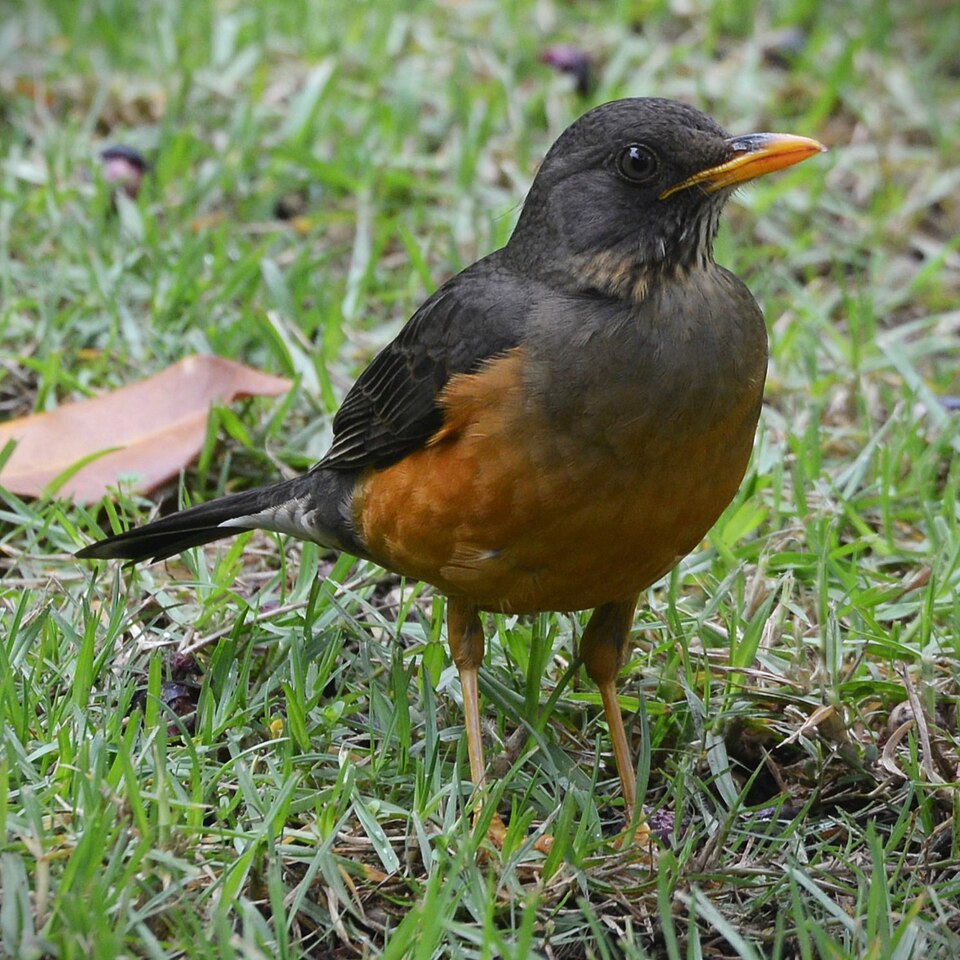
 Olive Thrush
Turdus olivaceus
Here all year
A rich, unhurried whistled song at first light and again at dusk, plus a lot of loud rustling in dead leaves.
British Library, CC BY 4.0Olive-brown above, orange along the flanks, with a bright orange bill and legs. Spends most of its time on the ground turning over leaf litter for worms. A shady bed with real leaf mulch will hold a pair almost permanently.
 🔍 Enlarge
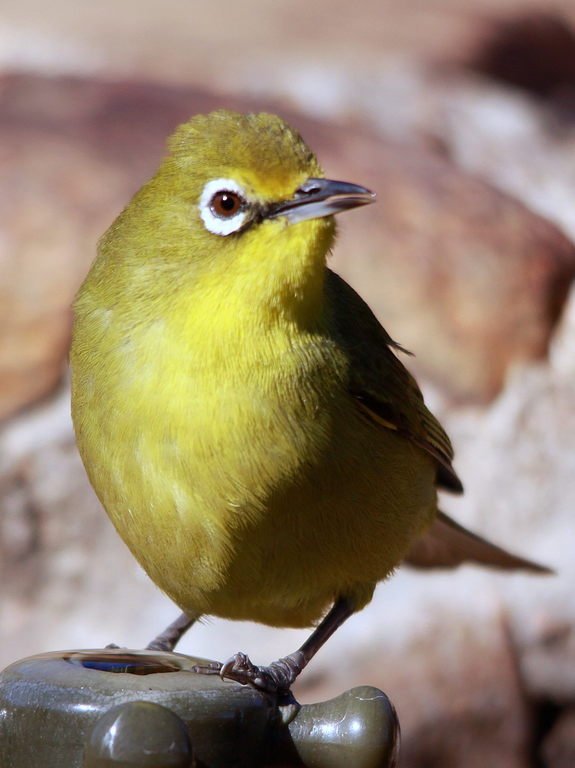
 Cape White-eye
Zosterops virens
Here all year
A thin, sweet warble and constant contact peeping as the flock moves through. Easy to miss until you know it.
JMK, CC BY-SA 4.0Tiny, yellow-green, with an unmistakable ring of white feathers around the eye. Moves in restless little parties through shrubs, taking insects, nectar and soft fruit. They will use a shallow birdbath constantly if you keep one topped up.
 🔍 Enlarge
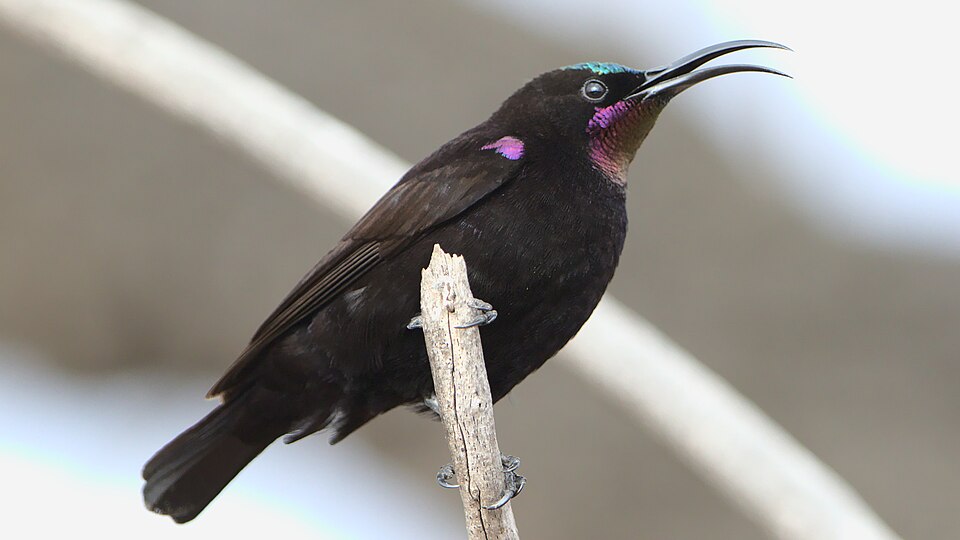
 Amethyst Sunbird
Chalcomitra amethystina
Here all year · best May–Sep. In season now
A sharp, metallic tik-tik-tik, often from the top of a flowering shrub before you spot the bird at all.
British Library, CC BY 4.0The male looks plain black until the light catches him, and then the throat blazes amethyst-purple and the forehead flashes green. The female is plain brown and streaked: a completely different-looking bird, which catches people out. Both feed on nectar from aloes, ericas and coral trees.
Eagles, hawks and owls
The Berea has Crowned Eagles nesting in Pigeon Valley, Gymnogenes raiding weaver nests, and owls that quietly handle the neighbourhood's rats. They have their own page.
Birds of prey & owls