Izinyoka
Sihlala nezinyoka eBerea, kuhlanganise nezinye eziyingozi. Cishe akekho lapha oyoke alinyazwe yinyoka. Abambalwa abalimalayo basuke bezama ukuyibulala noma ukuyibamba. Leli khasi likhuluma ngezinto ezimbili ezisiza ngempela: ukuthi ushayela bani, nokuthi ungenza kanjani ingadi yakho ingakhangi izinyoka.
Uma kunenyoka
- Suka lapho, uhambe nabo bonke abantu. Izingane nezinja kuqala. Ukuqhela ngamamitha amahlanu kwanele.
- Ungazami ukuyibamba noma ukuyibulala. Yilapho abantu ibaluma khona.
- Uma kuphephile, yibuke buqamama, ukuze ukwazi ukutshela umbambi wezinyoka ukuthi iyephi.
- Shayela ucingo umsusi wezinyoka. Izinombolo zingezansi. Izinyoka eziningi zihamba ngokwazo uma uzinika indlela ecacile yokuphuma.
Asikho isidingo sokwazi ukuthi hloboluni lwenyoka. Yenza okufanele kuzona zonke izinyoka; ezinobungozi nezingenabo.
Ongamshayela ucingo
Nick Evans
Umtakuli wezinyoka owaziwa kakhulu eThekwini · KwaZulu-Natal Amphibian & Reptile Conservation
Uthutha izinyoka azise kwenye indawo esikhundleni sokuzibulala, futhi ufundisa umphakathi kakhulu ngaphezu kokuphendula izingcingo. Incwadi yakhe yezithombe, i-Snakes of Durban, iyindawo engcono kakhulu yokuthola ukuthi ubone uhlobo lwenyoka: emva kokuba usuphephile.
Uma ungamtholi, laba abathathu babhaliswe ne-African Snakebite Institute futhi basebenza endaweni yethu:
Grant Cavanagh: 084 267 9402
Berea, Glenwood, Morningside, Bellair, Malvern
Shaun Venter: 061 466 3081
Umbilo, Glenwood, Carrington Heights, Bellair
Jason Arnold: 082 745 6375
Berea, Musgrave, Overport, Morningside
Uhlu oluphelele, olubuyekezwa njalo ngenyanga, lutholakala ku-African Snakebite Institute kanye nasohlelweni lwabo lwamahhala lwe-ASI Snakes. Kuhle ukuba nalo ngaphambi kokuthi uludinge.
Okungafanele ukwenze: izinto ezikhanga izinyoka
Izinyoka azinandaba nawe. Zilandela ukudla, futhi endaweni yokuhlala eThekwini lokho kusho amagundane. Cishe yonke inyoka esengadini ikhona ngoba kukhona okondla amagundane. Lungisa lokho, uzobe sewenze okungaphezu kokugawula nokuxosha.
Iningi labahlali alisoze liyibone inyoka. Cishe sonke sinomgqomo kadoti, inqwaba yomquba noma inqwaba yezinkuni esingayigcina kangcono.
Imigqomo kadoti engavaliwe, noma udoti okhishwa ngobusuku obandulela ukuthathwa kwawo.
Yilapha kuqala khona konke. Udoti wondla amagundane, futhi amagundane yiwo aletha izinyoka.
Izitsha zokudla noma zamanzi zezilwane ezifuywayo ezishiywa ngaphandle ubusuku bonke.
Isitsha esinokudla kuvulandi siyidili likaMkhipheni emagundaneni.
Ukudla kwezinyoni okuchithekile nezithelo eziwile zashiywa phansi.
Ukondla izinyoni kuhle. Ukondla amagundane angaphansi kwesitsha sezinyoni akukuhle.
Izinqwaba zemfucumfucu, izitini ezitakiwe, insimbi, izinkuni ezincike odongeni kuyindawo enhle yokucasha amagundane, nalokho okuwalandayo.
Umsebenzi ongcono kakhulu ongawenza ngentambama eyodwa.
Ingqumba yezinsalela zokudla okuphekiwe.
Imfucuza yasengadini ilungile. Izinsalela zasekhishini ziguquka zibe yisidleke samagundane.
Utshani obude nezihlahla eziminyene eziseduze nendlu.
Gcina umkhawulo ohlanzekile, ogundiwe, ukuze kungabikho okufinyelela ezindongeni nasezicabheni zakho kucashile.
Izikhala ngaphansi kweminyango nezimbobo ezingavalwanga eziya ophahleni.
Amagundane angena kuqala; bese noma yini ewazingelayo ingawalandela.
Ubuthi bamagundane.
Bubulala izikhova ezilawula amagundane akho mahhala. Bheka ikhasi lezikhova. Futhi abuyixazululi imbangela yokuthi amagundane eze.
Ukuzama ukuyibulala, ukuyibamba, ukuyivalela ekhoneni noma ukuyithwebula useduze.
Yilapho abantu belimala khona ngempela. Cishe konke ukulunywa kwenzeka kumuntu okhethe ukusondela.
The one you find when nobody is home
Often the first you know about a snake is a long, papery, silvery skin behind the pot plants, in the roof, or draped in a hedge. It can be startling, especially a big one, but it is genuinely good news: it means the snake was healthy, unbothered, and getting on with its life without anyone noticing. Most of them do exactly that, for years.
 🔍 Enlarge
 🔍 Enlarge
Photos: Wikimedia Commons and Wikimedia Commons
The skin is completely harmless to handle, and children generally think finding one is the best thing that has ever happened. An expert can often identify the species from the scale pattern, so photograph it next to something for scale before it falls apart. Put it on Spotted. It is a far better record of what actually lives around here than a sighting nobody managed to photograph.
Finding one does not mean you need a removal. It usually means a snake has been quietly working through your rodents. Worth reading the what-not-to-do list below though, since what drew it in is almost always something to eat.
Kwakuyiyiphi inyoka?
Kuthole lokhu ngokubheka isithombe usekude. Ungalokothi ukwenze inyoka isephambi kwakho. Okulandelayo kuyafana kuzo zonke izinyoka: suka, ugcine wonke umuntu ekude, bese ushaya ucingo. Ukwazi ukuthi bekuyiyiphi inyoka kubalulekile ngesizathu esisodwa kuphela, futhi okuyisizathu esihle: ukuze uyeke ukubulala lezo ezingenabungozi.
Harmless species come first here, deliberately. They are the ones you are most likely to meet, and the ones most often killed for nothing.
First, about green snakes
Nearly every green snake call on the Berea turns out to be the harmless Spotted Bush Snake. Nick Evans reckons around 80% of his call-outs are for green snakes, and roughly 95% of those are Bush Snakes.
Green Mambas are a coastal forest species and do not naturally occur in the built-up Berea. One did turn up in a Berea complex in 2020. It made the news precisely because it was so extraordinary. As Nick put it at the time, there is not a Green Mamba in every corner.
Ngakho: ungacabangi ukuthi inyoka eluhlaza ayinabungozi, futhi ungacabangi ukuthi eluhlaza iyimamba. Ungacabangi lutho, yima buqamama, ushaye ucingo. Ukuthola ukuthi iyinhloboni yenyoka kungalinda.
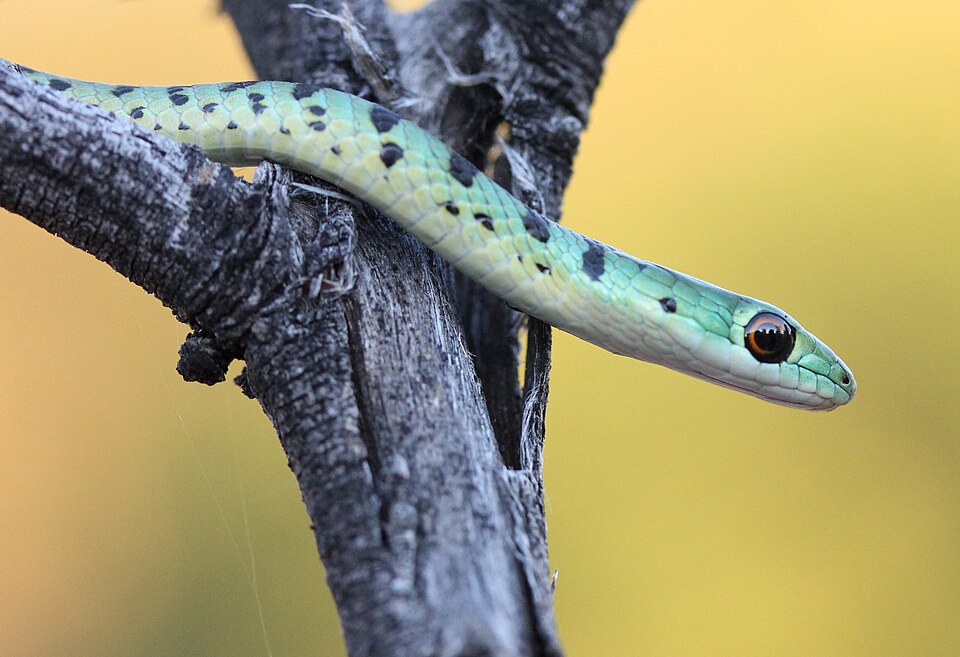 🔍 Enlarge
Spotted Bush Snake
Philothamnus semivariegatus
Ayinabungozi
How to tell: Slender and bright green, with black spots or bars over the front half and a long tail. Big dark eyes. Usually up in shrubs, on walls or in the roof.
This is the snake you are most likely to see here, and the one most often killed by mistake. It is completely harmless, cannot hurt you, and spends its time hunting geckos and lizards. If something green disappears up a wall at speed, this was almost certainly it.
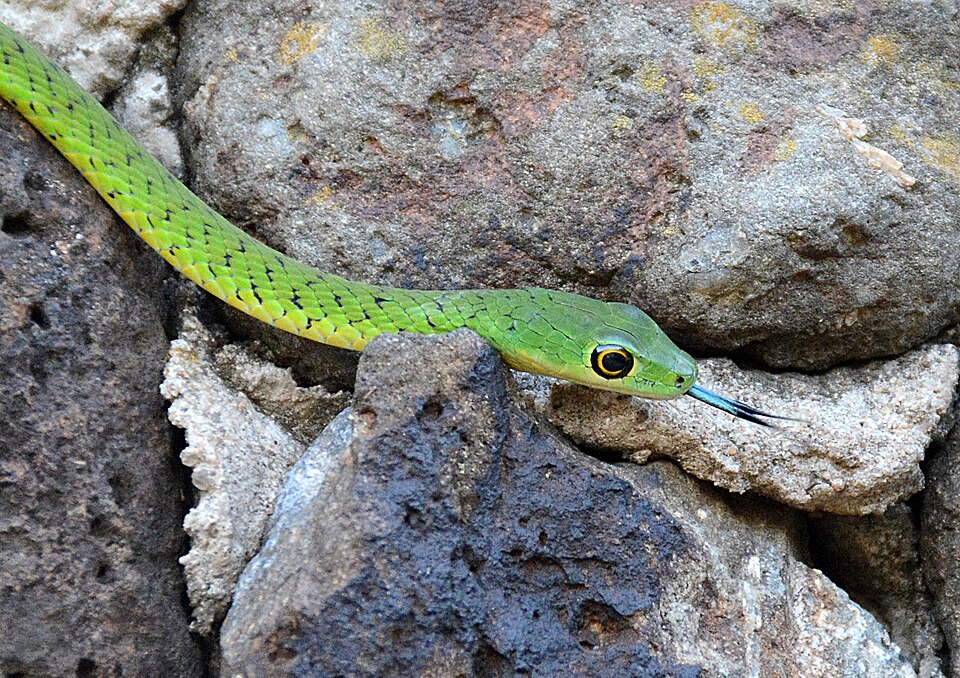 🔍 Enlarge
Natal Green Snake
Philothamnus natalensis
Ayinabungozi
How to tell: Uniform bright green with no spots, slimmer than a boomslang and with a much smaller eye.
Another harmless green garden snake, often confused with the Spotted Bush Snake and, less fairly, with a boomslang. Eats frogs and lizards. Common in gardens with dense cover and a pond.
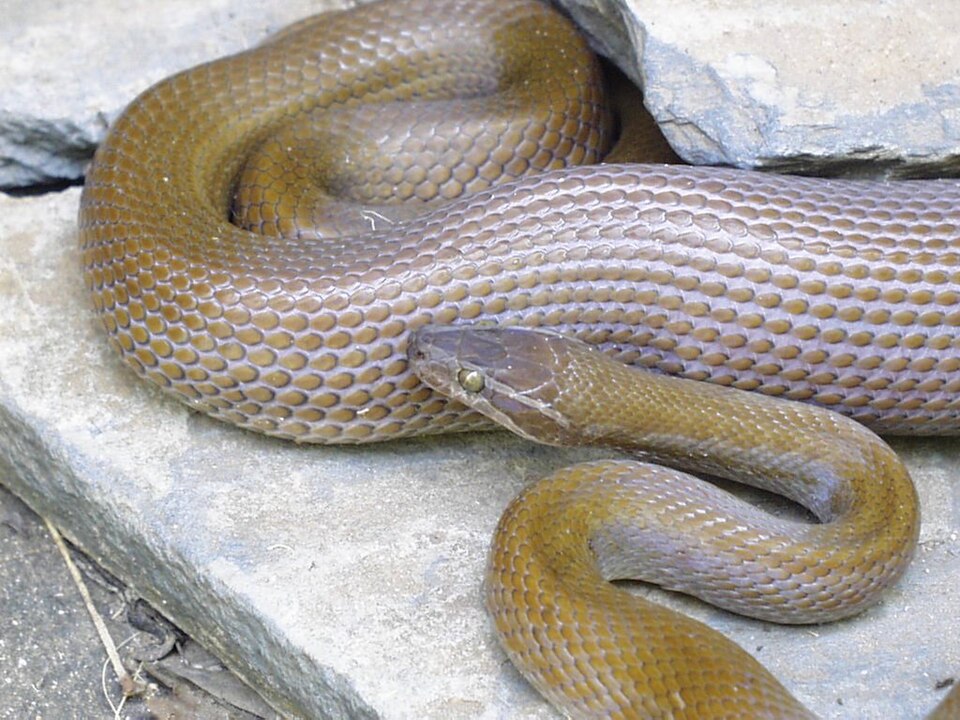 🔍 Enlarge
Brown House Snake
Boaedon capensis
Ayinabungozi
How to tell: Plain brown to reddish, glossy, with two pale cream stripes running back from the eye across the side of the head.
One of the most useful animals that can turn up in your yard. Harmless to people and a serious rodent hunter. A house snake in the garden is doing exactly the job you would otherwise reach for poison to do. Often found near outbuildings and compost heaps.
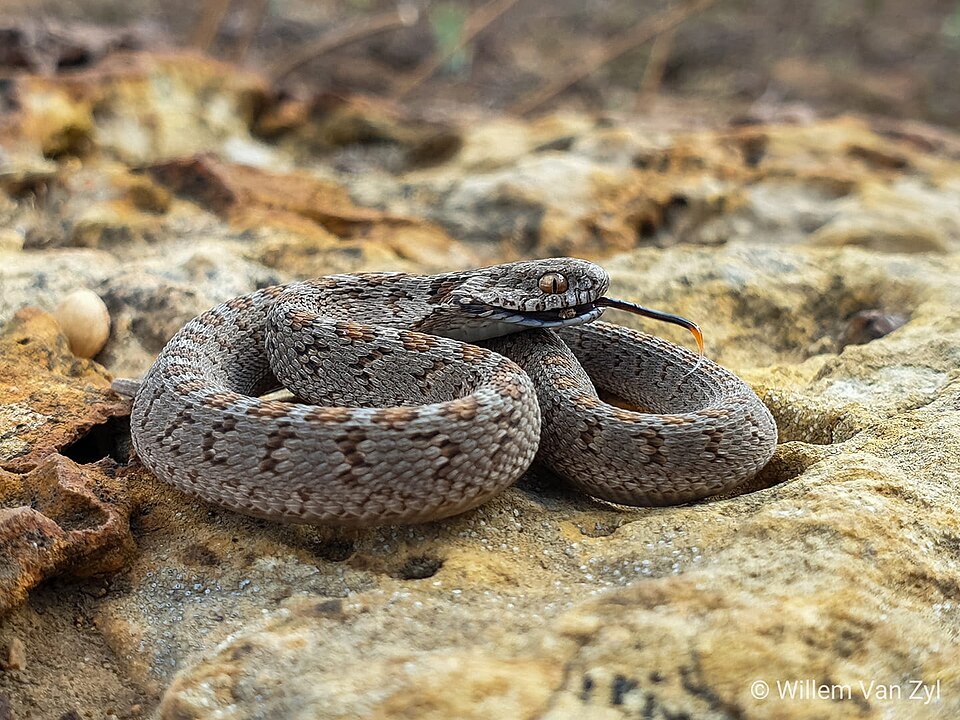 🔍 Enlarge
Common Egg-eater
Dasypeltis scabra
Ayinabungozi
How to tell: Grey-brown with dark blotches down the back. Looks a great deal like a Night Adder, which is exactly the point.
Completely harmless, and has no teeth worth speaking of. It swallows birds' eggs whole. Its defence is to imitate an adder: it coils, rubs its scales together to make a rasping hiss, and strikes with its mouth closed. Very convincing, and the reason many are killed.
 🔍 Enlarge
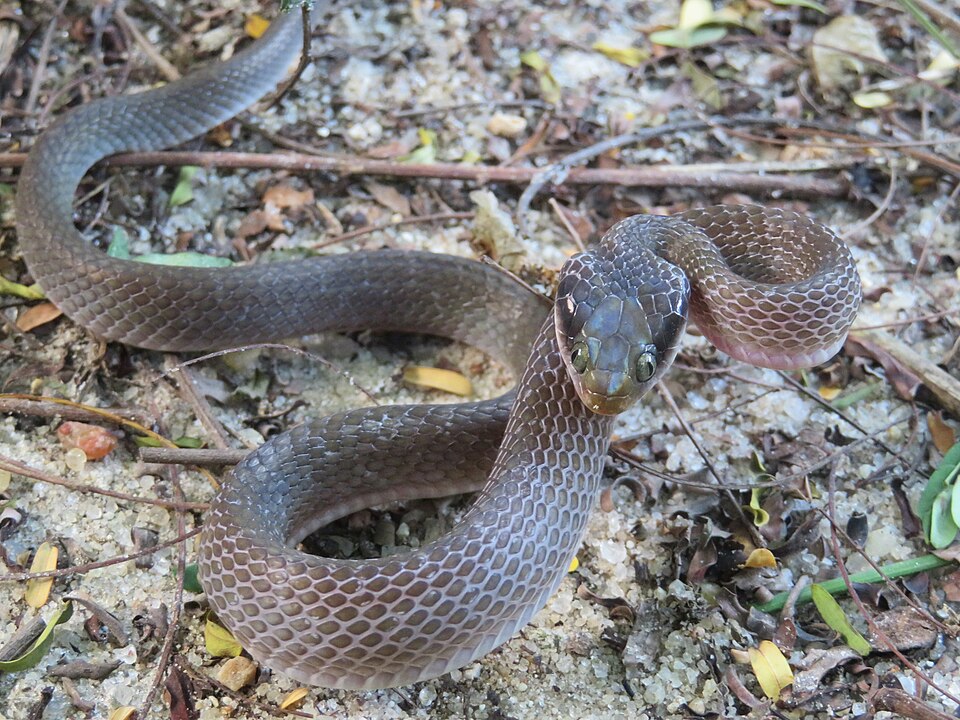
Herald Snake (Red-lipped Snake)
Crotaphopeltis hotamboeia
Inobuthi obuncane: ayiyona ingozi kubantu
How to tell: Olive to dark grey-brown, with a distinctly dark head and, usually, orange or red on the upper lip.
A common night-time garden visitor that comes out after rain to hunt frogs and toads. It puts on a big show when cornered, flattening its head and striking, but its venom is weak and it is not considered dangerous. Still not one to handle.
 🔍 Enlarge
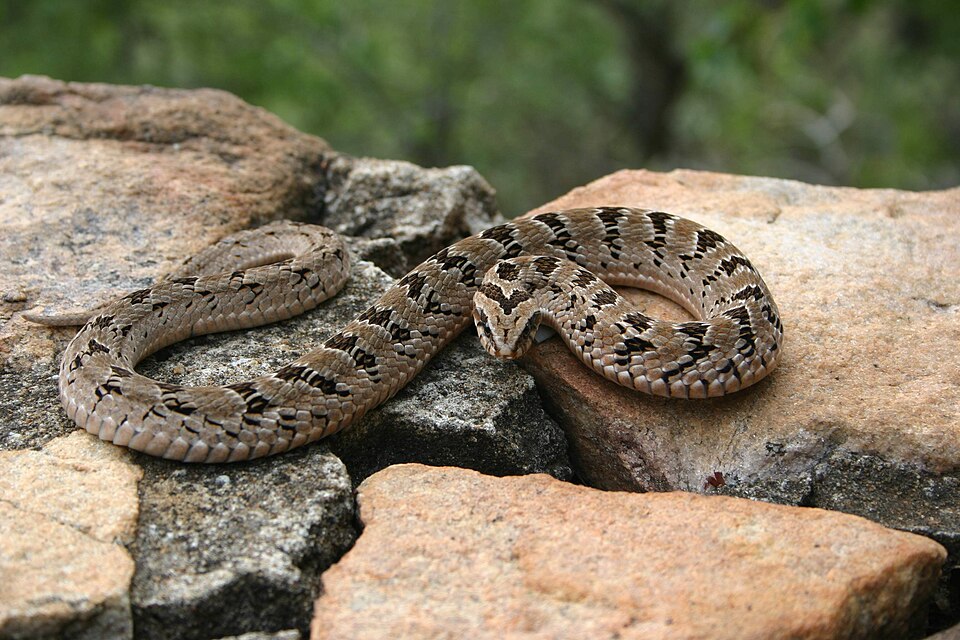
Rhombic Night Adder
Causus rhombeatus
Inobuthi: ukulunywa yiyo kubuhlungu, kodwa akuvamile ukuholela engozini yokufa
How to tell: Stocky, grey-brown, with a row of dark rhombic blotches down the back and a dark V on the head.
Slow-moving and often found near water or compost, hunting toads. Its bite causes severe pain and swelling but is very seldom life-threatening. Frequently confused with the harmless Egg-eater. Bites usually happen when someone stands on one at night or tries to move it.
 🔍 Enlarge
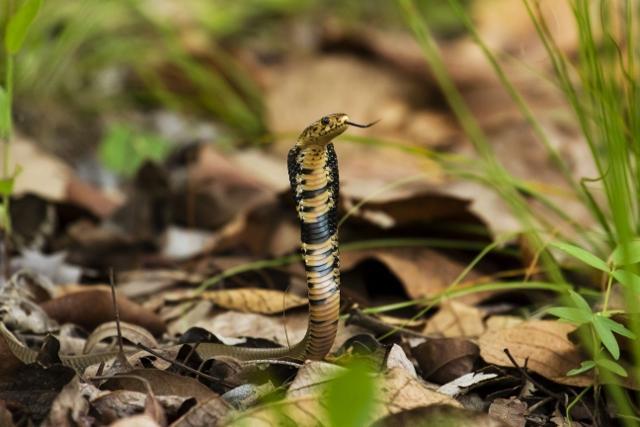
Imfezi (Mozambique Spitting Cobra)
Naja mossambica
Iyingozi: yisimo esiphuthumayo sezempilo
How to tell: Slate to olive-grey above, often salmon-pink underneath, and spreads a narrow hood when it rears up.
Ingakhafula ubuthi amamitha amaningana ibhekise emehlweni, ngakho qhela kakhulu kuyo futhi ungalokothi ugobe ukuze uyibuke eduze noma uyithwebule. Uma ubuthi bungena emehlweni, wageze kancane ngamanzi amaningi bese uya esibhedlela. Mostly active at night, and drawn in by rodents and frogs.
 🔍 Enlarge
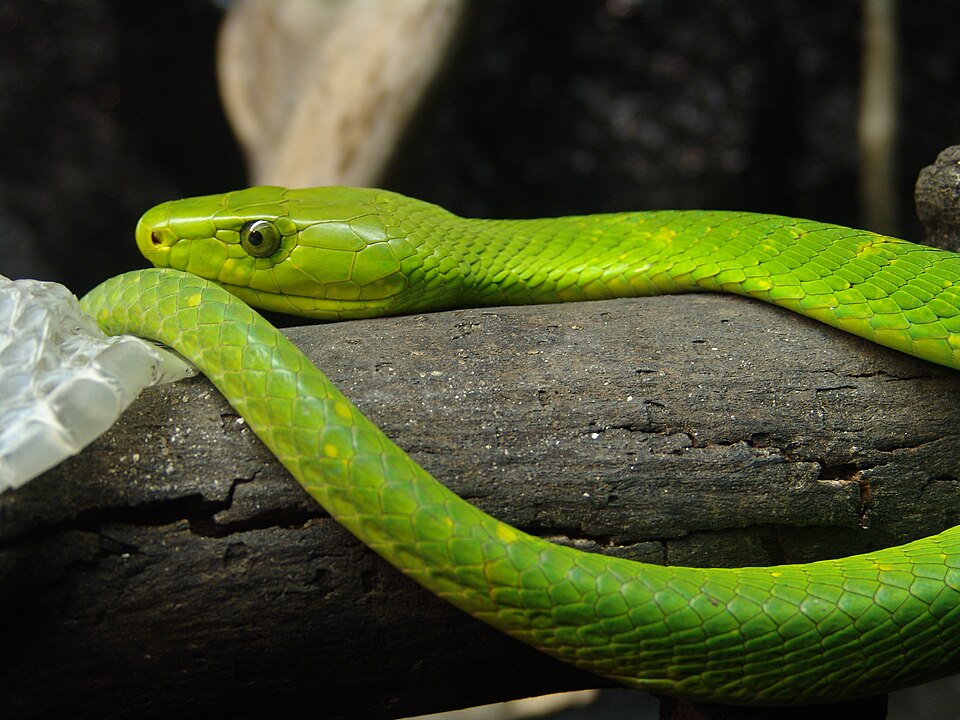
Imamba eluhlaza (Green Mamba)
Dendroaspis angusticeps
Iyingozi, kodwa ngokwemvelo yayo ayitholakali kulendawo
How to tell: Uniform bright green, large, slender and long (up to about 2m). Narrow coffin-shaped head, smooth scales, and a plain green body with no spots or bars.
Included because people ask, and because it is worth knowing the real answer. Green Mambas are a coastal forest species, generally found within a few kilometres of the sea, and they do not naturally occur in the built-up Berea. One was rescued from a Berea complex in 2020, which made the news precisely because it was so unusual. The snake had almost certainly hitched a ride. If you see a green snake here, it is overwhelmingly likely to be a Spotted Bush Snake.
 🔍 Enlarge
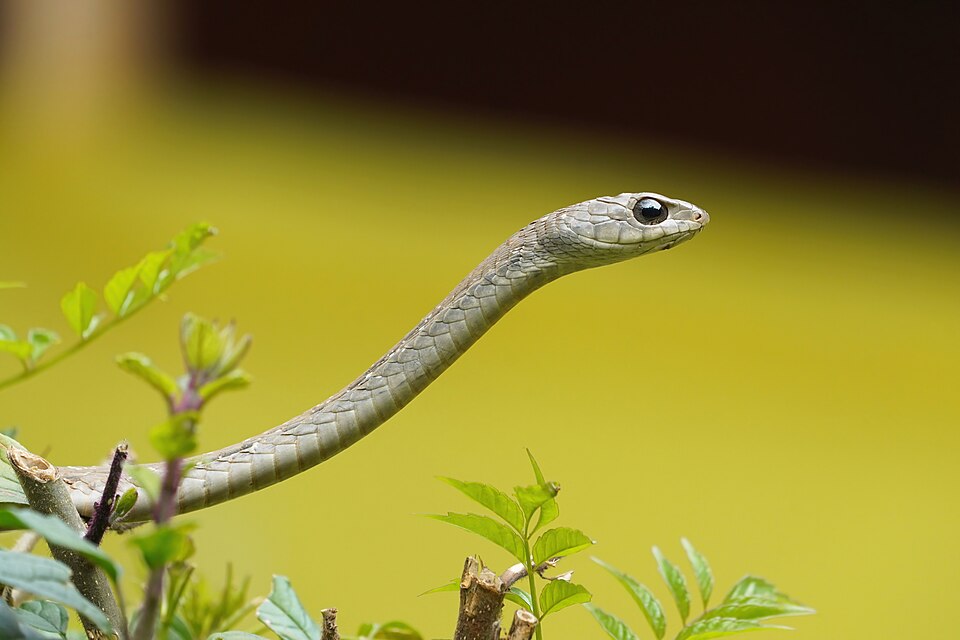
Boomslang
Dispholidus typus
Iyingozi: yisimo esiphuthumayo sezempilo
How to tell: Very large eye and a short, rounded head. Males often bright green with black-edged scales, females and juveniles usually plain brown or grey.
Lives up in trees and is extremely shy. It will almost always move away long before you notice it. Bites are very rare and nearly always involve someone handling one. Often blamed for harmless green snakes; the giveaway is that enormous eye.
 🔍 Enlarge
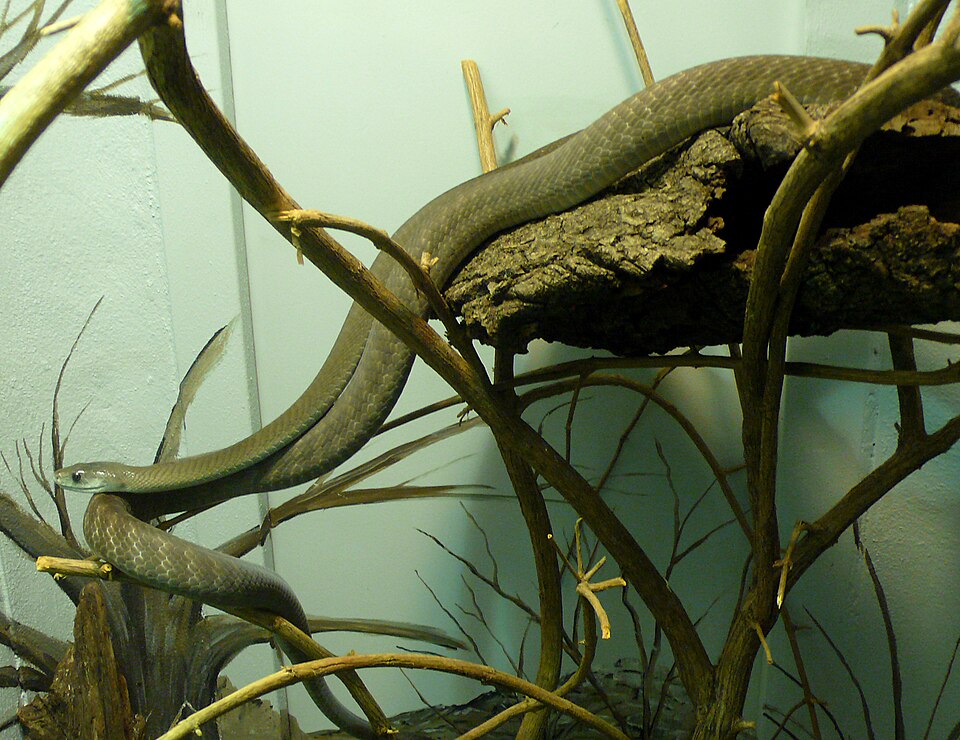
Imamba emnyama (Black Mamba)
Dendroaspis polylepis
Iyingozi: yisimo esiphuthumayo sezempilo
How to tell: Not black at all: gunmetal grey to olive-brown, long and slender, with a narrow coffin-shaped head. The name comes from the inky black inside of its mouth.
Present in the Durban area, though seldom seen. Its reputation for aggression is overstated: it is shy and its first choice is always to get away. Nearly every bite happens when someone corners one, tries to kill it, or handles it. Give it a clear route out and it will take it. Uma ikhona egcekeni lakho, gcina wonke umuntu ekude kakhulu bese ushayela umsusi wezinyoka ngokushesha.
 🔍 Enlarge
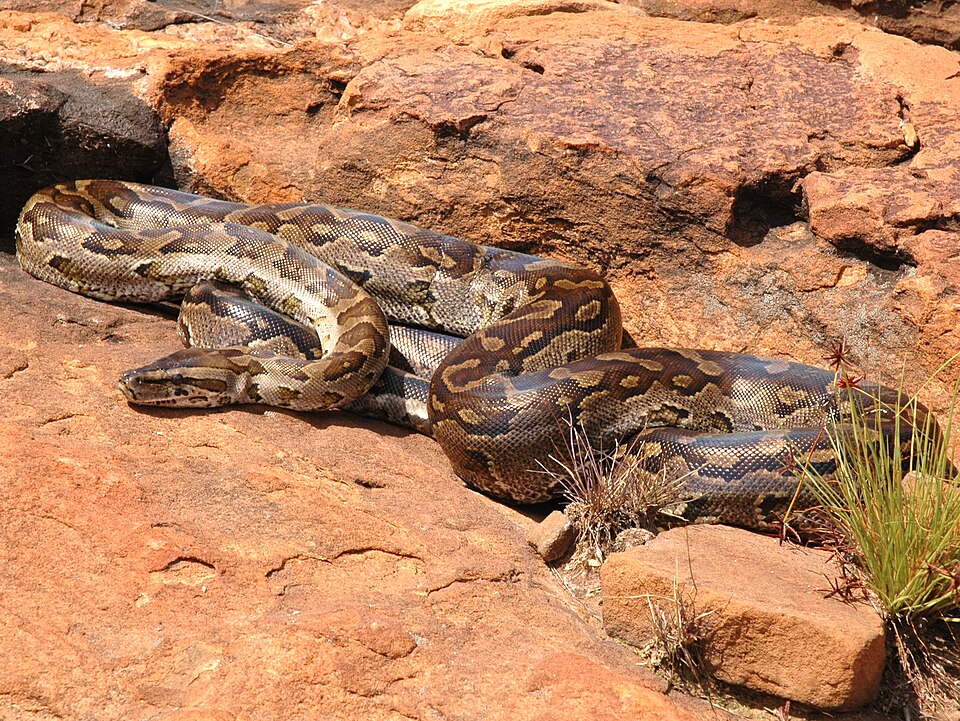
Inhlwathi (Southern African Python)
Python natalensis
Ayinabuthi, kodwa inkulu, futhi ivikelwe ngumthetho
How to tell: Very large and heavy-bodied, with dark blotches over grey-brown. Adults are unmistakable on size alone.
Ayinabuthi, futhi iyisilwane esivikelwe ngumthetho. Akukho emthethweni ukuyibulala. Turns up occasionally along the green corridors and river valleys around the Berea. A large python should only ever be handled by a professional, both for your safety and the animal's.
Sicela ungazibulali
Inyoka abantu abaningi abayibonayo lapha yi-Spotted Bush Snake: inde futhi izacile, iluhlaza okugqamile, ayinabungozi nhlobo, futhi izingela izigcilikisha. Ibulawa njalo ngoba kucatshangwa ukuthi ingenye inyoka. Yonke inyoka ebulawa ngeze isho ukuthi kuncipha okulawula amagundane, futhi ukuzama ukuyibulala yilapho abantu abaningi belunywa khona.
If you want to learn to tell them apart properly, the ASI runs snake awareness courses in Durban, including a Kids' Snake Awareness course. A much better way for children to learn this than from a website.
Photographed one from a safe distance? Add it to Spotted. A real photo is also how an expert can tell you what it actually was.